

AI Integration Services
Connect AI to the Systems Running Your Business — Without Rebuilding What Already Works.
Most AI projects reach a point where the model does what it was built to do. It performs well in testing, the output looks right, and everyone agrees it's ready to go live. But everything that decides whether AI earns its budget happens after that point — in the data pipelines, the permissions, the API contracts, and the systems already running the business. That's where our AI integration services start.
Signs Your Business Needs AI Integration Services
When your team is doing the integrations by hand, someone reads an answer out of one tool and keys it into another, or exports a report for a model to score and manually uploads the result afterwards. It works, but those manual steps quietly set the ceiling on how much value AI can bring to your business.
Without custom integrations, the AI you already pay for can't see all your data. An internal assistant that isn’t connected to your contracts and policy documents, or a forecasting model working from static exports, will keep producing results that are defensible in general but not grounded in real-time data.
The system you’ve built does what it should in testing, but then stalls in review because it’s not entirely clear which records it touches, who is allowed to see the output, or what happens when it gets an answer wrong. Access design and audit logging are what clear that review and get those systems released.


years of experience
delivered solutions
clients
Our AI Integration Services: Six Ways to Get AI Into Production
Acropolium’s AI integration services cover the entire path from deciding where AI belongs to keeping it running once it's live. Delivery stays fully in-house from the first estimate through post-launch support, which is how 5 of our clients have stayed with us for over a decade.

Enterprise AI Integration
Enterprise AI integration services handle what only appears at scale, including role-based access, audit trails, data residency, and change controls. We design it before code is written, then deploy into your cloud, on-premise, or hybrid environment, without taking the platform offline.

AI Consulting & Strategy
Our AI/ML consulting starts with your operation rather than a technology roadmap: which process is expensive enough, repetitive enough, and documented well enough to be worth automating. If AI doesn't pay there yet, we'll say so and tell you what would have to change first.

Custom AI Integration
Off-the-shelf connectors assume your business runs the way the vendor imagined. Custom AI consulting and integration services start from your workflow as it actually runs, exceptions and approvals included, so the software fits your unique process rather than reshaping it.

AI Tool & Software Integration
Most companies own AI tools that aren't entirely connected to anything. We wire them into the applications your teams work in, so output lands where decisions get made. Where a tool can't do the job it needs to, we'll say so before you renew.
AI API Integration
AI API integration services connect model providers to your stack through interfaces that survive rate limits, version changes, and outages, with fallback routing and per-request cost control. It sits alongside our custom API development services, so one team owns both sides.

AI/ML Data Integration
A model is only as good as the data reaching it, which usually sits across a warehouse, several SaaS products, and an undocumented database. We build pipelines that collect, clean, and refresh data, with recorded lineage so every answer traces back to source.

AI Models & Platforms We Integrate
Models change faster than the systems around them. We build the connection layer so you can swap a provider or add another model without rebuilding what's already live, then keep them coordinated through multi-model AI integration and shared orchestration.
LLMs (GPT, Claude, Gemini, Llama)
Commercial and open-weight models for drafting, classification, extraction and support. LLM customization narrows a general model on your own material, while open-weight models can run inside your infrastructure where data can't leave it.
Computer Vision Models
Object detection, segmentation, quality inspection, and medical imaging, all connected to the systems that act on those results. A defect flagged on the line opens a ticket rather than a dashboard entry, with human review steps included.
Predictive & ML Models
Forecasting, classification, and anomaly detection built into planning, pricing, and risk workflows. Most of the engineering goes into retraining, drift monitoring, and what happens when confidence drops, which we clearly define with you before launch.
RAG & Knowledge Base Systems
Answers grounded in your internal documents, tickets, and product data instead of the model's training set. We build the indexing, chunking, and permission filtering, so output stays inside each user's existing access rights and carries citations back to source.
AI Agents & Automation Frameworks
Agents that work across your systems need clear boundaries as much as capability. We define what each one can access, which actions need approval, and how every step is logged, so any action it takes can be reviewed and reversed.


Systems We Connect AI To
Advanced AI integration services depend as much on the software your business already runs as on the model itself. Most of it stays exactly as it is, while we build the integrations around it.
CRM & ERP Systems
The platforms your teams work in daily, including those heavily customized ones that barely resemble the original product. We integrate at the data and workflow level, so records stay authoritative rather than drifting into a separate AI database.

Legacy Software Modernization
The hardest systems to integrate are old, undocumented, and too important to switch off. We've completed 65 modernizations, and the usual route is adding a layer around the system rather than a full rewrite, so your legacy software stays live throughout.
Cloud & On-Premise Infrastructure
AWS, Azure, and Google Cloud, plus on-premise and hybrid environments where regulation keeps data on your own premises. Model choice follows that constraint, and all deployments are built to meet HIPAA, GDPR, and PSD2 requirements where they apply.

Data Warehouses & Databases
Snowflake, BigQuery, Redshift, and the operational databases underneath. We connect models without turning every inference into a full table scan, keep query cost visible, and enforce existing warehouse access controls in the AI layer.
Web & Mobile Applications
AI features inside your own products, held to the same latency and reliability standards as everything else: streaming responses, graceful degradation when a provider is slow, caching for repeated questions.
Why Choose Acropolium as Your AI Integration Service Provider
Acropolium has been building custom software since 2003, and most of what decides whether an AI integration works is engineering we were already doing before the models arrived: designing architecture, connecting systems, AI software development, and keeping them running for years afterwards. That's 455 applications delivered for over 150 clients, four of them in the Fortune 500.
Enterprise experience, boutique attention

5 client relationships past the 10-year mark, 9 past five years

Architects and business analysts in the room before you sign

Delivered in-house, never subcontracted
We'll tell you where AI doesn't pay
Industries We Serve With AI Integration Services
We've built and maintained systems in each of these sectors, so the constraints surface during the initial scoping, not in the security review. The way systems interact, what they have to record, who signs off, and how long data is kept differ in every one.
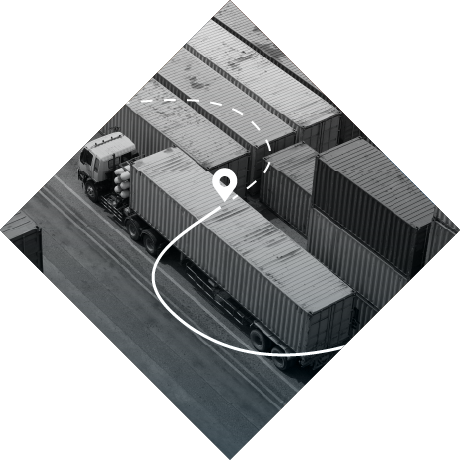
Transportation
- Route optimization, demand forecasting, and document processing wired into TMS, WMS, and carrier APIs.
- Feeds often arrive late and incomplete, so the pipeline that cleans them will determine how good the model's output will be.

Manufacturing
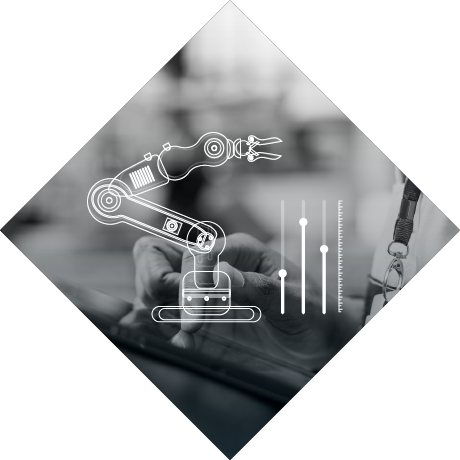
- Quality monitoring, predictive maintenance, and demand forecasting, all connected to production sensors and ERP.
- Shop-floor equipment and business systems speak different protocols, and turning sensor data into a form the ERP can use is most of the project.
Healthcare
- Resource planning, clinical documentation, and diagnostic support integrated with EHR and hospital systems, built to meet HIPAA requirements.
- Human review is part of the design from the start.

Hospitality
- Demand forecasting, dynamic pricing, and guest communication connected to PMS, channel managers, and global distribution systems.
- Integrations have to hold through peak seasons, when a sync failure could mean a room sold twice or not sold at all.

Energy
- Predictive maintenance and production monitoring across SCADA systems, IoT sensor streams, and asset management software.
- Sites are geographically dispersed, and connectivity is uneven, which shapes where inference actually runs.

Fintech
- Fraud detection, anti-money laundering, and risk scoring, built with audit trails a regulator can clearly follow.
- Models that can't show their reasoning won't clear a compliance review or survive an audit, so the decision trail gets built into the system across each layer.



Get a free software project consultation
FAQ
- What is AI integration?
What is AI integration?
AI integration is the engineering that connects a model to existing systems and company data. It encompasses the data pipelines that feed the model, the API layers, the permissions that dictate what each model can access, and where the output lands so someone can act on it. Model selection is a separate process and usually a smaller task.
- What is included in enterprise AI integration services?
What is included in enterprise AI integration services?
Discovery and process selection, the design and implementation of data pipelines, model selection or customization, API and orchestration layer, security and access design, deployment, and post-launch monitoring. Once it’s at the enterprise level, the security and governance aspects usually outweigh the model work, including role-based access, audit logs, data residency, and a rollout that doesn’t disrupt the existing platform. Each part is scoped separately.
- How much do custom AI integration services cost?
How much do custom AI integration services cost?
Price is correlated to the cleanliness of your data, the number of systems the model interacts with, and whether human approval is required. Our AI Workflow Automation package starts at $15,000, with SMB scope from $35,000 and enterprise from $60,000. Taking a pilot to production through AI Platform Engineering starts at $20,000. Anything beyond those packages is custom scoped.
- How long does it take to integrate AI into an existing system?
How long does it take to integrate AI into an existing system?
Timelines depend on the quality of your data and the number of systems the model interacts with. Our AI Workflow Automation package is delivered in four to ten weeks, and AI Platform Engineering takes an existing pilot to production in six to ten weeks. That window covers the security review, load behavior, and cost control rather than work on the model itself.
- Which platforms can you integrate AI with?
Which platforms can you integrate AI with?
CRM and ERP systems, both web and mobile apps, cloud environments on AWS, Azure, and Google Cloud, and on-premise or hybrid infrastructures. On the model side, we work with both commercial APIs and open-weight models, including those running completely within your own infrastructure. Data warehouses such as Snowflake, BigQuery, and Redshift connect directly. A system with an API or a database can usually be integrated.