Most development teams don’t need to build a backend from scratch. They can rely on managed backend services instead. Serverless backend platforms and Backend-as-a-Service (BaaS) solutions exist precisely for that: a managed layer that handles the infrastructure so your team can focus on the product itself.
“When using BaaS, developers can concentrate on the business logic and only work on the parts that make money, without bothering with the tech underlayers,” explains Acropolium’s Founder Oleksii Glib.
By shifting infrastructure management, scaling and routine maintenance to a reliable cloud provider, companies can reduce time-to-market and keep development budgets in check. Instead of spending time on server configuration, security patches, database administration, development teams can focus on features that directly affect user experience and revenue.
The popularity of serverless backend and BaaS solutions has led to many backend platforms and serverless computing services entering the market. But even though they have similar features, the offerings still differ from vendor to vendor…
In this article, we compare 6 of the best serverless backend and BaaS platforms available in 2026: what each one does well, where it falls short and which type of project it fits.
Key Takeaways
Serverless backend and BaaS platforms let you outsource backend infrastructure (databases, authentication, hosting) so your team can focus on the frontend and business logic.
The right choice depends on your project’s specific needs, not on a vendor’s popularity or marketing.
Acropolium can help assess your project’s requirements and choose a BaaS approach that fits your technical needs, scalability goals and long-term maintenance plans.
What is the difference between serverless backend and BaaS?
Serverless backend platforms and BaaS solutions help developers build, deploy and scale application backends without managing traditional server infrastructure. Some provide a complete set of managed backend services, others offer more flexibility in how developers build and deploy their applications.
The distinction matters when choosing a platform:
BaaS (Backend-as-a-Service) provides a ready-made set of backend services (authentication, database, file storage, push notifications, APIs) accessible through SDKs, with little or no custom server code required. The provider manages the underlying infrastructure in a managed deployment. Some BaaS platforms also offer self-hosting options, giving teams more control over the infrastructure.
Serverless backend platforms provide managed building blocks and deployment tools for backend functionality, often including serverless compute, APIs, databases, authentication and storage. They generally give developers more control over how the backend is assembled than a traditional BaaS.
Some platforms blend both approaches, offering managed services alongside serverless computing. Firebase and Supabase are good examples of platforms that combine BaaS convenience with serverless flexibility.
This guide focuses on platforms that fall primarily in the BaaS category or meaningfully combine BaaS features with serverless backend capabilities.
Choosing the right serverless backend or BaaS provider: when it makes sense?
Backend developer hiring can be difficult, slow, and expensive – and for many products, it’s also unnecessary. If your project needs standard backend capabilities but not a fully custom infrastructure from day one, a serverless backend or BaaS platform is worth considering before you start recruiting. It can be a strong fit if your project:
is an MVP or a proof of concept – a good moment to launch fast and validate before investing in custom infrastructure;
is a frontend-heavy app or single-page application;
is small with a tight budget;
has a limited number of integrations;
is short on backend developers;
needs typical backend features such as data management, user authentication, or verification.
BaaS and serverless backend platforms fit a wide range of industries, from social media and ride-hailing to gaming and healthcare. Whichever field you’re in, the right serverless backend provider will help you ship faster, spend less on development, and keep your team lean.
Best serverless backend and BaaS platforms in 2026
Here is what the current market looks like in 2026 across the leading platforms.
Firebase: BaaS/serverless backend platform
Firebase is Google’s cross-platform BaaS and serverless backend solution, strengthened after Google acquired Firebase in 2014 to expand its backend capabilities. According to Statista’s measurement, its analytics-SDK integration reaches over 99% of Android apps on the Play Store, making it the most widely deployed managed service in the mobile development ecosystem.
The platform has evolved well beyond its NoSQL roots. Alongside the original Firestore document database, Firebase now offers Data Connect – a PostgreSQL-backed layer that became generally available in April 2025 and opens the door to relational data modeling for teams that need it. On the AI side, a new Firebase AI Logic announced at Google I/O 2026 lets developers integrate Gemini models into mobile and web apps through Firebase SDKs across Kotlin, Swift, JavaScript, and Dart.
The broader feature set covers authentication, analytics, push notifications, serverless backend logic via Cloud Functions, and an ML Kit with ready-to-use APIs for text recognition, landmark recognition and image labeling. Firebase also connects with a wide range of Google Cloud products: Looker Studio, Play Store, AdMob, Google Ads, and BigQuery among them…
In practice, Firebase works especially well for mobile applications that need real-time sync and offline support. It also works well as one platform for authentication, data sync, and notifications in mobile apps.
Duolingo, for example, uses Firebase Cloud Messaging to deliver daily lesson reminders to lots of devices without managing its own notification infrastructure.
Gameloft uses Firebase Remote Config to adjust in-game parameters on the fly, without shipping a new app version.
Supabase: open-source BaaS/Backend platform
Supabase is an open-source Firebase alternative built on PostgreSQL. It bundles a relational database, authentication, auto-generated REST APIs, GraphQL support, Edge Functions and file storage into one all-in-one backend platform. Because the core is open-source, you can self-host the whole thing if you need full control over your data.
The SQL foundation is what sets Supabase apart from most serverless backend and BaaS platforms. You get standard PostgreSQL with JOINs, CTEs, window functions and Row Level Security, enforced through auth rules that live directly in the database for access control at the database layer. That makes it a natural fit for teams building anything with complex relational data: multi-tenant SaaS products, analytics-heavy applications or projects where a document store would start showing its limits. Supabase also supports pgvector, which has made it a go-to choice for teams building AI features that require similarity search or embeddings.
The platform has grown quickly, and many developers choose it because it combines SQL flexibility with managed BaaS services. By mid-2026, Supabase had grown to nearly 10 million developers, more than doubling in under eight months, and raised $500M at a $10B pre-money / $10.5B post-money valuation in June 2026. It is widely considered a popular choice for web-first products where transparent pricing and a reduced lock-in path matter.
Mozilla has adopted it for internal tooling precisely because the open-source foundation means there’s a clear self-hosting path if needs change.
Peerlist, a professional network for technical specialists, migrated from Firebase to Supabase specifically to get SQL querying for complex profile analytics and more predictable costs at scale.
Appwrite: open-source BaaS platform
Appwrite is an open-source BaaS platform that covers authentication, managed databases, file upload and storage and serverless functions, available either as a managed service or a fully self-hosted deployment. It supports a wide range of SDKs across web, mobile, and server-side languages. Appwrite’s permission system is built around fine-grained, per-resource auth rules, making it a good fit for teams that want backend services without managing long running processes themselves.
Where Appwrite stands out is the self-hosting option. For teams in regulated industries or those with strict data residency requirements, being able to run the entire backend on their own infrastructure can support compliance goals and give teams complete control over their data. Self-hosting can be a valuable path toward meeting certain compliance requirements, though it is not inherently required; the right approach depends on your specific regulatory obligations and risk profile.
Appwrite’s public customer base skews toward product teams and startups rather than large enterprises.
Radar used it to replace a custom backend and save over $1 million in overhead.
Socialaize uses Appwrite Cloud to handle 200,000–600,000 function executions per day.
Smartbee built real-time industrial monitoring for coal mines in Colombia.
AWS Amplify: full-stack platform
AWS Amplify is a full-stack platform that helps teams build, deploy and host web and mobile applications using managed AWS services. AWS launched Amplify in November 2017 as an open-source library for building cloud-connected web and mobile applications. Amplify provides tools for authentication, data, storage, serverless functions and hosting, while integrating these capabilities with AWS services such as Cognito, AppSync, Lambda and S3.
Through AWS you also get access to Cognito for identity management, a managed API layer via AppSync, advanced ML and AI capabilities via Amazon Bedrock and AWS Lambda as the function layer teams commonly pair with Amplify for custom logic.
In practice, Amplify works well for development teams already invested in the AWS ecosystem. Amazon Music built its Cloud Queue feature (playlist synchronization across mobile and voice devices, including offline playback) on top of AWS AppSync and Amplify, scaling to millions of concurrent users while keeping latency low.
The learning curve is steep, and the platform moves fast – documentation can lag behind releases. Standard AWS Lambda functions have a maximum timeout of 15 minutes per execution, so heavier or long-running tasks may need a different pattern; for containerized workloads, services like AWS Fargate or ECS are common alternatives. Amplify Hosting doesn’t include a traditional application-level load balancer, though AWS Elastic Load Balancer can be added separately for backend services that need traffic distribution.
Pricing follows a pay-as-you-go model with a free tier for smaller workloads. Amplify Gen 2, the newer code-first iteration built around TypeScript, has made backend configuration significantly more approachable for teams that want to define their infrastructure in code rather than through a console.
Backendless: BaaS platform
Backendless comes with open-source SDKs, which means you can extend the platform with your own code if something is missing out of the box. It covers authentication, social login, push notifications, geo queries, file upload, data import and export, and advanced analytics. Hosting is available either locally or in the cloud on any platform.
It’s a practical choice for teams that want low-code flexibility without giving up the option to write custom server side code when they need it, especially when a project needs custom business logic beyond simple no-code flows. The no-code UI Builder and AI-assisted development tools make it accessible to less experienced developers, while the open-source SDKs ensure that more technical teams aren’t boxed in.
The pricing is flexible. The free tier includes a reasonable monthly allowance of API calls and database storage, and if you need more headroom without moving to a higher plan, you can buy function packs to extend your current tier.
Bank al Etihad, a Jordanian bank, built its mobile banking app on Backendless – covering accounts, credit cards, and business loans for individual and corporate customers.
Back4App: BaaS/Parse-based backend platform
Back4App is a hosting platform built on Parse Server – an open-source backend framework that started as a Facebook product. Back4App includes SDK integration, cloud code functions, autoscaling, managed database management, geo queries, multi-tenant support and a manageable dashboard – an all-in-one backend for teams that want an open foundation.
Parse Server supports both MongoDB and PostgreSQL, giving teams the flexibility to choose between a document store and a relational database depending on their project’s needs. The platform now includes an AI agent that can generate a database schema from natural language prompts. In 2025, Back4App achieved HIPAA attestation and SOC2 Type 1, making it a viable option for healthcare and enterprise plans with compliance requirements.
Snap Inc. used Parse, the framework Back4App is built on, during Snapchat’s early development, which allowed a small team to iterate quickly before the product needed its own infrastructure. It’s a pattern that reflects where Back4App fits well today: teams that want an open, transparent backend without vendor lock-in, and the option to scale into more demanding environments over time. The free tier covers smaller workloads. Back4App offers 24/7 support options, including community, email, tickets, Slack and technical support channels.
Read also: Backend as a Servise (BaaS): What is it & Key benefits
How to choose the right serverless backend or BaaS provider
Before looking at individual platforms, it’s worth being clear on what actually matters for your project when comparing backend as a service options. These are the criteria that tend to decide the choice:
- Compliance
GDPR compliance and data-processing requirements vary by provider, region and deployment model. HIPAA attestation is less common – verify this early if you’re building anything in healthcare.
- Security model
Review access control at the API, function, and database levels, not just at login or authentication level.
- Pricing model
Pay-as-you-go plans like Firebase Blaze can produce unpredictable bills at scale. Plan-based pricing from platforms such as Supabase and Backendless can be easier to forecast than purely usage-based models, but teams should still model storage, compute, bandwidth and database usage at scale.
- Database type
NoSQL works well for mobile-first, real-time apps. SQL/PostgreSQL is a better fit for complex relational application data.
- Vendor lock-in
Open-source platforms like Supabase, Appwrite and Back4App give you a reduced lock-in path or a clear self-hosting option. Proprietary platforms like Firebase come with tighter ecosystem dependencies.
- AI tooling and integrations
Firebase provides Firebase AI Logic for Gemini-powered features; Back4App offers an AI Agent for backend development; AWS applications built with Amplify can integrate with Amazon Bedrock.
- Self-hosting
Supabase and Appwrite both support full self-hosted deployments for teams that need data residency control or want to avoid public cloud dependencies – an important option, though not an inherently required one; suitability depends on your specific regulatory context.
Read also: BaaS vs FaaS: Which Serverless Architecture is Right for You?
Why work with Acropolium on your BaaS project
Choosing the right serverless backend or BaaS platform is only half the decision. Getting it implemented correctly, with the right serverless architecture, security configuration and integration setup, is where most projects either gain or lose the time they were hoping to save.
Acropolium has been building custom web and mobile products for over 20 years, across healthcare, hospitality, logistics, fintech, and social media. In that time, we’ve worked with several of the platforms covered in this article, including Firebase and AWS Amplify for projects where an off-the-shelf solution isn’t the right fit.
What that means in practice: we don’t default to one stack. We look at what a project actually needs: its compliance requirements, data model, team size, budget, and long-term maintenance expectations – and recommend the cloud platform that fits those constraints.
Our BaaS services cover the full range: consulting on platform selection, implementation and integration, architecture design for scalable BaaS systems, and ongoing support.
Curious how it works in practice? Take a look at our case studies below.
Acropolium case studies: serverless backend and BaaS in practice
The following two projects from Acropolium’s portfolio show how the team has applied BaaS and serverless approaches to solve specific product and infrastructure challenges.
Wellness social media app: rebuilding a platform from scratch
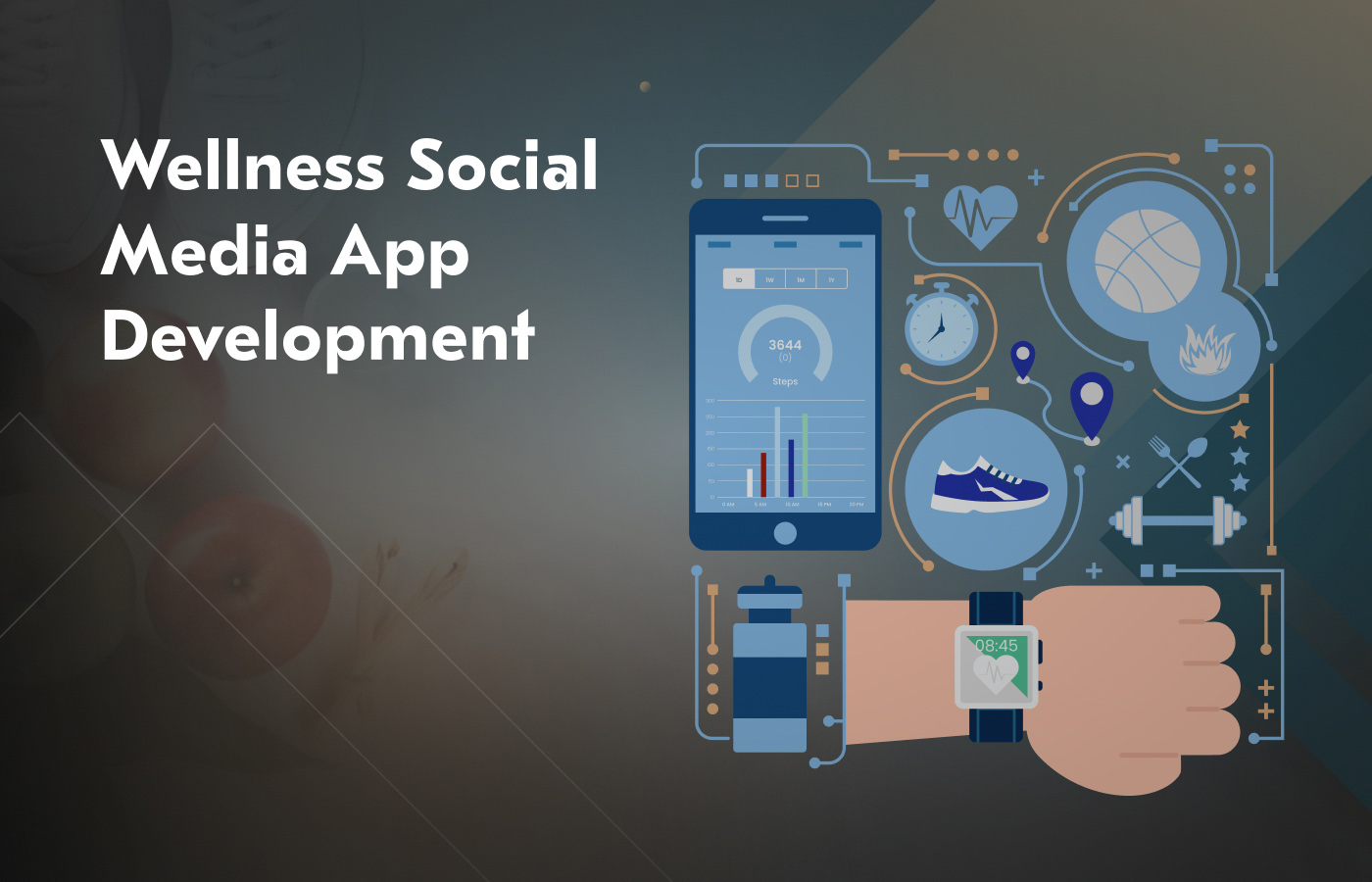
A Germany-based startup came to Acropolium in a difficult position. They had a working concept – a mobile social platform built around healthy habits, mindfulness, and peer support – but the first development attempt had left them with an unstable backend, poorly structured code, and no technical documentation to speak of. The previous vendor had built something that technically ran, but couldn’t be extended, scaled, or maintained without significant risk.
Before any new features could be added, the team had to understand what they were actually working with. Acropolium conducted a full technical audit of the inherited codebase, mapped the architectural problems and identified which components were salvageable. The conclusion was that the backend needed to be largely rebuilt, attempting to build on the existing foundation would have compounded the problems rather than resolved them.
The rebuilt architecture used Google Cloud’s Firebase as the BaaS layer, handling authentication, real-time data synchronization, and file upload storage. Node.js covered the custom backend logic, and React Native gave the startup a single codebase for both iOS and Android. Four specialists worked on the project for over a year, keeping close contact with the founders throughout to make sure the technical decisions stayed aligned with the product vision.
The outcome was a stable, documented social platform delivered under tight investor deadlines. Overall engineering costs came down by 40%, and the cross-platform mobile approach cut mobile development costs by 50% compared to maintaining separate native codebases.
Addiction recovery mobile app: sensitive healthcare on a lean architecture
A private rehabilitation clinic in the Netherlands had a problem that wasn’t primarily technical. Patients dealing with addiction often refused to discuss sensitive topics face to face, which created communication gaps that made it harder for the clinical team to help. The clinic needed a mobile application that would let patients connect with doctors, complete self-assessments, and access support resources – all within an interface designed to feel safe rather than clinical.
The client had no in-house technical team, which meant both the product definition and the development had to happen in parallel. Building a custom backend from scratch in that context would have extended the timeline significantly and added infrastructure overhead the team wasn’t equipped to manage.
Acropolium used Firebase as the managed service layer to handle authentication, data storage, and real-time communication between patients and healthcare providers. That decision significantly reduced the need to build and operate backend infrastructure, freeing the team to focus on the features that actually mattered: a drug and alcohol self-assessment tool, a directory of licensed healthcare organizations, geolocation-based mapping of support points and secure messaging with clinical staff.
The app shipped for both iOS and Android, and Firebase reduced development time by 40% compared to a custom backend approach.
The result was a working product that addressed the clinic’s core challenge – reducing the friction around sensitive conversations – without requiring the client to build or maintain any server infrastructure of their own.
Final thoughts
Serverless backend and BaaS platforms are a practical choice when you’re building a SaaS MVP, a static site or single-page application, a solution with standard backend requirements or anything with a tight deadline and limited backend resources. These platforms reduce the overhead of provisioning and maintaining infrastructure, letting teams focus on what makes their product different.
The market has enough options that the decision takes some work. Different projects call for different platforms – what works for a mobile application with real-time sync may be a poor fit for a SaaS product with complex relational data. The details that tend to matter most are GDPR and HIPAA compliance (including BAA agreements where relevant), managed database options, available integrations, and how predictable the pricing is at the scale you’re planning for.
The serverless backend and BaaS landscape has shifted noticeably by 2026. Leading platforms include Firebase, Supabase, Appwrite, Backendless, Back4App and AWS Amplify. AWS Amplify sits somewhat differently from the other platforms: it is a full-stack development layer over AWS services, while Firebase, Supabase, Appwrite, Backendless and Back4App are more directly positioned as backend/BaaS platforms.
Firebase now supports SQL alongside its document store. Supabase has become a popular choice for web-first products and recently crossed 10 million developers. Back4App has added enterprise compliance attestations. And open-source platforms like Supabase and Appwrite are increasingly the choice for teams that want a reduced lock-in path or a self-hosting option if their needs change.
If you’re not sure which provider fits your situation, the Acropolium team is happy to help, drop us a line.