

API Modernization Services
Modernize Your API Architecture. Accelerate Business Growth.
Legacy APIs create hidden costs – from stalled integrations and security risks to engineering time lost on maintenance instead of innovation. Acropolium delivers end-to-end API modernization services that transform outdated systems into high-performance architectures built for today’s workloads, strict compliance requirements, and critical integrations.
Signs Your APIs Need Modernization
When the API layer is the constraint, the symptoms are hard to miss. Release slips, partner onboarding stretches on for months, and critical security findings remain unresolved because your team is busy keeping existing connections stable. What looks like a delivery problem or a staffing problem is often a structural one.
Legacy API infrastructure often creates these bottlenecks because it was built for a different scale, compliance requirements, and fewer integration partners than your business connects to today. Instead of applying temporary patches to recurring failures, API modernization rebuilds your underlying architecture to permanently eliminate technical debt and ensure your systems scale effortlessly.


years of experience
delivered solutions
clients

Legacy API Challenges Acropolium Solves
As a top-rated custom software development company, Acropolium knows how to effectively overcome the technical and operational challenges that prevent your APIs from scaling, integrating, and supporting business growth.
API Scaling Ceilings
Often, the scaling problems clients bring to Acropolium are less about server capacity and more about architecture. Stateful session handling, tightly coupled services, and gateway configurations designed for traffic levels the API was never built to support are the usual root causes. Depending on the architecture, adopting microservices or other modern design patterns can improve API maintainability, scalability, and resilience. Our highly-skilled engineering team redesigns the integration layer to support current and future business demands, helping to enhance scalability and flexibility through independent development and deployment of services.
Maintenance Cost Eating the Roadmap
If your senior engineers spend more time keeping an API alive than building new features, the API maintenance burden has become one of your organization's most expensive constraints. Outdated APIs fail in unpredictable ways, and documentation that's years out of date makes every incident slower to diagnose and resolve. API modernization reduces maintenance costs and redirects the budget toward the features the business actually needs by adopting more modular service patterns that support faster development, easier maintenance, and long-term scalability.
API Latency Under Load
A chain of synchronous API calls that works at launch can slow significantly during peak demand. Common causes are missing pagination, no caching layer, or payloads designed for a much smaller dataset. We trace the request path, identify the main source of latency, and redesign the affected API flow. The result is more stable response times as traffic grows, improved API performance across dependent services, and a framework that supports more scalable APIs.
Legacy Protocols and Architecture
Every third-party integration on outdated systems becomes an expensive negotiation between what your legacy API can handle and what modern platforms expect. This is common with APIs still running SOAP, XML-RPC, or early REST implementations built before APIs had to support today’s massive, multi-connection workloads. Moving from traditional SOAP-based APIs to RESTful APIs, where appropriate, reduces workarounds, improves interoperability, and lowers the risk that future platform updates on either side will break existing integrations. Acropolium API experts know how to rebuild the API layer to make new integrations faster to implement, easier to maintain, and ready to scale with growing business needs.
Authentication and Access Gaps
Many legacy APIs still authenticate with long-lived API keys issued before OAuth 2.0 became widely adopted, with no rate limiting or token rotation. Every connected system inherits those vulnerabilities, creating audit and compliance challenges in regulated industries, such as delayed SOC 2 reviews, delayed HIPAA attestations, or security requirements in integration agreements that the business can’t satisfy. We close those gaps as part of the same API modernization effort by implementing modern authentication, stronger security protocols, robust access management, rate limiting, and token lifecycle management. These API security enhancements help protect sensitive data, safeguard data integrity, and support ongoing compliance across connected systems.

Our End-to-End API Modernization Services
Our approach to API modernization is tailored to your architecture. Based on the audit findings, we recommend only the services needed to address your technical challenges, business priorities, and future growth plans.

API Assessment and Strategy
Before any code changes, we map your API landscape: what’s in production, how existing APIs interact with your infrastructure, where the failure points are, and what delayed modernization is already costing your business. The result is a prioritized API program roadmap with technical recommendations, implementation priorities, and the projected business impact for each initiative. Every finding comes with a clear next step. This is where our API modernization services typically begin.

API Re-Engineering and Migration
Our API migration consulting starts with integration layers that have outgrown their original architecture: API migration from SOAP to REST, REST to GraphQL when the use case warrants it, monolithic services to modular architectures, API integration across enterprise systems, or moving APIs from on-premises environments to the cloud. Re-engineering is carried out incrementally where possible – no dark cutover window and no risky weekend deployment.

Ongoing API Support
Acropolium continues to support your APIs after deployment through API versioning, security patching, performance tuning, and ongoing optimization of your new APIs as usage grows, which helps to keep business operations stable and reliable. We apply this same long-term support model across our custom API development services to reduce technical drift, maintain performance, and ensure your APIs continue to meet the changing business and technology requirements.

Security and Compliance Upgrades
Acropolium treats API security as a design requirement, not a checklist. We strengthen authentication and authorization, implement rate limiting and token management, add encryption where it’s needed, and address the compliance requirements relevant to your industry – whether that's PCI DSS for payment flows, HIPAA for healthcare data exchange, or GDPR for APIs processing the personal data of EU residents. Security and compliance are planned alongside backend development and built directly into the architecture, which helps to support regulatory compliance and deliver modern API solutions with minimal disruption to your business operations.

Cloud and Legacy System Integration
Modernizing a legacy API layer often exposes deep integration gaps with on-premises systems that were never designed for seamless integration with cloud services. Our software development team draws on its cloud computing consulting expertise to integrate APIs across on-premises and cloud environments in ways that unify your infrastructure and eliminate manual data workarounds. You get reliable, cloud-ready integrations that follow API development practices without forcing a full system replacement onto a timeline you can’t control.

API Management and Monitoring
After modernization, the system needs effective API governance: rate limiting, versioning policies, access control, API design standards, monitoring, and visibility into endpoint performance throughout the API lifecycle. Acropolium API professionals build this governance layer into enterprise development projects to support secure, reliable connectivity between cloud infrastructure and legacy backend systems while following API management best practices. The result is a greater visibility into API performance, faster issue detection, and improved system interoperability - without waiting for customers to report an outage.

Our API Modernization Process
Acropolium follows a structured six-stage API modernization process that provides clear visibility at every stage, keeps you informed at each decision point, and allows priorities and scope to be refined before implementation begins. This approach helps reduce project risk, maintain alignment with business objectives, and deliver modernization of legacy APIs with minimal disruption to your ongoing business operations.

Discovery and Audit
We start by documenting your current API infrastructure in full: production endpoints, system dependencies, authentication mechanisms, performance baselines, and known failure points. This stage frequently uncovers issues that weren't on the original scope list, such as undocumented endpoints, deprecated dependencies still in active use, and security gaps that internal teams were aware of but hadn't fully assessed. You gain a clear, evidence-based understanding of your API environment before any modernization priorities or remediation plans are defined.

Strategy and Roadmap
Based on the audit findings, Acropolium prioritizes the problems to solve, defines the optimal implementation sequence, and outlines the expected cost, effort, and business impact of each initiative. Prioritization is driven by business value – a security vulnerability affecting a payment flow ranks above a latency issue affecting an internal reporting tool. The roadmap includes clear timelines, key dependencies, and a detailed view of what the modernized API architecture will look like once each stage is complete.
Design and Development
We redesign the target architecture and develop the updated APIs in stages, providing clear visibility into progress as each phase is delivered. Each stage is validated against the agreed specifications before the next begins. Where API migration services are involved, Acropolium specialists design transitional architectures and migration paths that minimize disruption and prevent breaking consuming systems.

Integration and Testing
Updated APIs are connected to consuming systems in a controlled environment before production deployment. Testing covers functional correctness, security controls, performance under expected workloads, and regression testing for existing integrations. Issues found during testing are cheaper to resolve than issues found in production; that's why testing runs in parallel with development throughout the engagement.

Deployment
Acropolium manages production releases in stages, with rollback plans for each. The goal is to avoid disruption to live business processes. Deployments are carefully scheduled, communicated to dependent teams, and monitored closely through the transition window. We don't hand off a go-live date and leave – we're online through the release to ensure a smooth, stable deployment.

Ongoing Support
Support continues after launch, and many clients continue working with Acropolium long-term to reduce technical drift, optimize API performance, maintain security and stability, and adapt their API ecosystem to changing business needs.
Why Choose Acropolium for API Modernization
Acropolium delivers reliable API modernization solutions for companies where downtime isn't an option and compliance isn't negotiable.

API Modernization Consulting Before Development
Our process starts with an audit and a roadmap. Clients who come to us with a brief to "just re-engineer the API" often find during discovery that the scope needs adjusting – either because the actual problem is upstream, or because a proposed approach would create new risks downstream. We surface those findings early.

22 Years of Integration and Modernization Work Across Industries
Acropolium has worked as a trusted API modernization company for healthcare, fintech, logistics, retail, hospitality, and other regulated environments where the cost of a disruption during transition is concrete. That history means we know where migrations typically go wrong and how to avoid those points before they become incidents.

Part of a Broader Digital Transformation Capability
API modernization doesn't happen in isolation from the rest of an organization's technical infrastructure. Where the scope extends beyond the API layer into legacy systems, cloud migration, or AI integration, Acropolium can handle it without bringing in a second vendor, supporting broader digital transformation across the company.

Designed to Minimize Disruption to Live Operations
Incremental migration, staged rollouts, and rollback planning are built into how we perform. Acropolium has worked on enterprise APIs operating at high daily call volumes. This same enterprise API development experience shapes how we plan every transition and support every business expansion.

Independently Verified by Clients
Acropolium holds a 5-star rating on Clutch and GoodFirms, and has been named to Clutch's list of top 1000 global service providers based on verified client reviews.

Compliance Is Built Into the Architecture
Security and compliance requirements for HIPAA, PCI DSS, PSD2, and GDPR are considered early at the design stage. Our legacy software modernization services and API engineering teams work together when modernization spans both the API layer and the systems behind it.

ISO 9001-Certified Delivery
Documented processes, defined checkpoints, and consistent output regardless of project size. You know what was decided at each stage, why, and what it cost.
Industries We Serve
API modernization requirements vary significantly by industry. Compliance rules, data sensitivity, partner ecosystem expectations, and the average age of the technology in production all differ. Our API modernization services are scoped around what your sector actually requires.
Healthcare
- Healthcare organizations using EHR and EMR integrations must comply with HIPAA and HITECH requirements that apply across the data exchange process, including API security, access controls, and data handling.
- Acropolium provides healthcare APIs modernization services with compliance documentation built into the delivery, which means audit readiness is built in from the start.


Fintech
- Payment APIs and financial data exchange interfaces carry direct regulatory exposure, which is why fintech API modernization typically includes authentication upgrades, PCI DSS and PSD2 alignment, and performance tuning for transaction volume.
- A delayed settlement or a missed reporting deadline is the kind of incident that gets escalated straight to the board.

Logistics
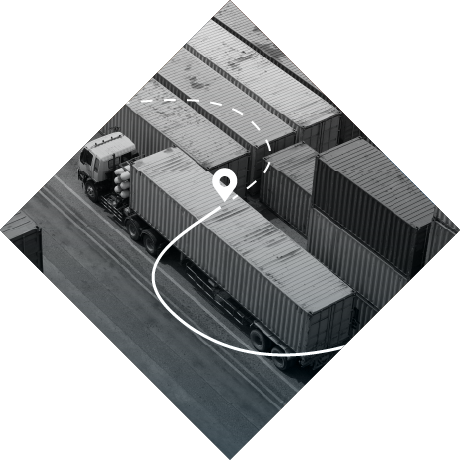
- Carrier APIs, customs interfaces, and warehouse management are common starting points for logistics API modernization, often carrying significant technical debt accumulated across years of partner-specific workarounds.
- We consolidate and re-engineer these connections. This keeps shipment data current, integrations maintainable, and prevents the team from manually reconciling batch files.
Automotive
- Dealer management systems, telematics APIs, and fleet management integrations are the usual starting point for automotive API modernization, accumulating compatibility issues as vehicle data standards change and the systems on the other end get updated on their own schedule.
- Our engineering team modernizes these connections so that data flows between systems without the manual consolidation work that currently consumes operational time.

Retail
- Inventory, POS, and marketplace APIs are where retail API modernization delivers the fastest payoff, since these usually show their limits when retail businesses grow or expand to new sales channels.
- Acropolium helps modernize these integrations to handle current volumes and reduce the manual reconciliation that accumulates when systems don't stay in sync.

Hospitality
- Property management, booking platform, and channel manager integrations are common candidates for hospitality API modernization, often patched together over time as a hotel or travel business adds new platforms.
- Acropolium replaces fragile, multi-step data flows with direct, well-documented API connections that give operations teams accurate availability and pricing data without manual intervention.



Get a free software project consultation
FAQ
- What is API modernization?
What is API modernization?
API modernization means updating existing API infrastructure so it works better with current systems, security requirements, and traffic levels. That may mean improving individual endpoints, updating protocols, or rebuilding part of a legacy integration layer. The right scope depends on what the audit shows and what the business needs.
- When should a company modernize its APIs?
When should a company modernize its APIs?
A company should modernize its APIs when the current setup is slowing delivery, creating security risk, or making integrations harder than they should be. Common signs include repeated performance issues, outdated authentication, or connections that take too long. An audit helps confirm whether modernization is the right move.
- How long does API modernization take?
How long does API modernization take?
It depends on the size of the system and the scope of the work. A focused engagement may take four to ten weeks, while a larger legacy migration can take longer. We give a timeline after discovery, once we know what’s actually involved.
- Do you provide API modernization consulting services before development?
Do you provide API modernization consulting services before development?
Yes. Acropolium starts with API modernization consulting before any development begins. That phase includes an audit, key findings, and a roadmap with recommended next steps.