
ChatGPT Integration Services
ChatGPT Integrations Connected to Your Systems, Your Data, and Your Access Rules
Adding a ChatGPT API key to your software takes minutes, and for simple automation, that may be enough. For complex system-level integrations, the real work is building the access rules, the connections to your other software, and the retrieval that keeps every answer tied to your own documents and data. We build ChatGPT integrations that stay accurate, hold up under load, and clear your security review — inside the applications your business already runs on.
When Does Your Business Need ChatGPT Integration?
Most ChatGPT integration projects start after the model is already part of the workflow. A few paid seats turn into daily use across departments, all of it happening outside your own systems, with nothing logged and nothing reviewed. Answer quality depends on who wrote the prompt, and nobody owns the output.
Accuracy is another key trigger. A general model answers from its training data, not from your knowledge base or live CRM records. Output that reaches your customers needs retrieval from your own sources, a citation log back to the document, and defined fallback behavior when the required context is missing.
Once ChatGPT is doing real work in production, it keeps needing attention. Usage grows and the bill grows with it, usually without a spend limit set per team. Someone edits a prompt with no test to show whether answers got better, and the model version your system runs on will eventually be retired.


years of experience
delivered solutions
clients

Our ChatGPT Integration Services: From the API Layer to Ongoing Support
All of our ChatGPT integration services start with your workflow: what it costs to run today, which systems hold the data, and where a wrong answer would cause real damage. A solution architect and a business analyst join that scoping before you sign, which is why our estimate holds on timeline and budget.
Custom ChatGPT Integration
Custom ChatGPT integration services are built around your team's existing processes, including their exceptions and approval steps. Where a general model answers too broadly, LLM customization narrows it onto your own material and terminology.
ChatGPT API Integration
ChatGPT API integration services connect the models to your stack through a layer that handles rate limits, retries, timeouts, and per-request cost tracking. Usage caps and routing rules are set per team, so one workflow can’t consume the whole budget.
ChatGPT Integration for Customer Support
Drafted replies, ticket classification, and answers pulled from your own help content, inside the queue your agents already work in. Some tickets may require an action, like a refund, an order change, or a cancellation. AI agents development adds the approval step and the log behind each one.
Ongoing ChatGPT Support & Optimization
After launch, prompts get changed, source documents move, and the model version you built on gets retired. We score answer quality against a fixed set of questions, re-tune prompts and retrieval when the score drops, and handle version migrations.
ChatGPT Integration for CRM & ERP
Working from the data already in your CRM or ERP, we build account summaries, field updates from incoming documents, and suggested next steps into the system itself. The design work is settling what it can read, what it can write, and which fields need human review.
ChatGPT Integration for Content & Document Workflows
Contracts, specifications, tenders, and reports are drafted, compared, and summarized against your own templates and knowledge base. We test it on documents with known correct answers, so you see how often it gets them right before going live.

Systems & Platforms We Integrate ChatGPT With
Every system we connect with ChatGPT comes with its own set of rules, from who may see a record and what kind of output it produces to how much its API will let you pull. We build the integrations around those rules, and use AI connectors where a system has no usable API of its own.



Our ChatGPT Integration Process
Each step in our integration process ends with something that can be tested and approved before the next one starts. Where the use case isn't settled yet, our AI Readiness Assessment takes 3 to 5 business days and the fee is credited to the build.

Discovery & Use-Case Scoping
We compare the processes you're considering based on volume, cost per case, and what it costs you today, then scope the ones worth building. If the numbers don't justify a build yet, we say so and tell you what would have to change first.

API Setup & Architecture
We first set up access, quotas, logging, and the boundary between your infrastructure and the provider. The layer is built in a way that a second model can be added later through multi-model AI integration without reworking the application around it from scratch.

Prompt Design & Fine-Tuning
Prompt structure, retrieval, and the point where fine-tuning earns its cost. Most of the value here comes from giving the model the right source materials for each step, and ensuring every change is measured on real examples from your process where the correct output is already known.

Integration & Development
The integration is built into the application with permissions, write-back rules, and audit logging in place from the first commit. Clear error handling guardrails cover any potential issues like a slow provider, a refused request, or an output the system should hold back for human review.

Testing & QA
Before release, the integration is tested on what could potentially break it, including missing or contradictory documents, prompt injection attempts, and inputs outside what it was built to handle. QA is built into every step rather than simply run as a gate at the end.

Deployment & Support
Release to a limited group, watch the cost and output quality against the same scored set, and only then widen access. After launch, we keep the integration current through prompt changes, retrieval updates, and migrations when a model version reaches its end date.
Why Choose Acropolium as Your ChatGPT Integration Company
Acropolium has built custom software since 2003, and most of what decides whether a ChatGPT integration holds up is the quality of engineering: data access, API design, permissions, and release discipline. We have delivered 455 applications over that time, and this work sits alongside broader AI integration and AI software development engagements run by the same team of experienced engineers.

23 years of custom software development

Enterprise experience, boutique attention
We'll tell you where AI doesn't pay

5 client relationships past the 10-year mark, 9 past five years
Built and maintained in-house, never subcontracted
Cloud, on-premise, or hybrid deployment, chosen by your data rules
Industries We Serve With ChatGPT Integration Services
We've built and maintained systems in each of these sectors, so the constraints surface during the initial scoping, not the security review. The documents a ChatGPT integration has to work from, what it's allowed to write back, who signs off before output is used, and how long each request has to be kept differ in each one.
Logistics
- Customs and tender document processing, shipment exception handling, and carrier correspondence, all connected to TMS, WMS, and carrier APIs.
- Paperwork arrives as scans and free text from dozens of partners, so the extraction layer decides how much of the process can run without human supervision.

Manufacturing
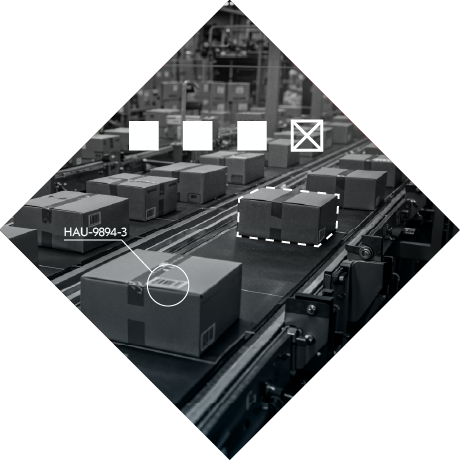
- Maintenance and SOP retrieval, supplier specification comparison, and non-conformance reporting, connected to ERP and your internal document management system.
- Manuals and drawings exist in multiple revisions, which requires strict version control in the retrieval layer.
Healthcare
- Clinical documentation, intake summarization, and referral and authorization letters integrated with EHR and hospital systems, built to meet HIPAA requirements.
- Where PHI may be processed decides the deployment model, and that gets settled before the build starts.

Hospitality
- Guest messaging, booking change handling, and review responses connected to PMS, channel managers, and global distribution systems.
- Rates and cancellation rules can change daily, so an integration working without real-time data may quote a guest a price you no longer offer.

Energy
- Maintenance history search, incident reporting, and permit documentation, all connected to asset management systems and decades of scanned archives.
- Those archives were often built by different teams under different naming rules, and making them searchable as one consolidated source is most of the build.

Fintech
- KYC document review, customer query handling, and policy search, all built with an audit trail a regulator can follow.
- Every prompt, source document, and output is accurately recorded, because a decision nobody can reconstruct won't survive a review.



Get a free software project consultation
FAQ
- What is ChatGPT integration, and how does it work?
What is ChatGPT integration, and how does it work?
ChatGPT integration is the engineering that connects the model to your existing systems and data. Requests are checked for permissions, matched to relevant records, sent to the model with that context, and returned into the application your team is working in. The model call is the simple part, as most of the project time goes to retrieval, access rules, and logging.
- How long does ChatGPT integration take?
How long does ChatGPT integration take?
Timelines depend on how accessible the data is and how many systems the integration touches. For reference, our complex service like the AI Workflow Automation package is delivered in four to ten weeks, while AI Platform Engineering takes an existing prototype to production in six to ten weeks. Anything outside those packages is scoped separately.
- Which platforms and systems can ChatGPT be integrated with?
Which platforms and systems can ChatGPT be integrated with?
Our Chat GPT integration services cover CRM and ERP platforms, helpdesk tools, internal documentation, your web and mobile applications, and the rest of your business software. Deployment runs on AWS, Azure, and Google Cloud, plus on-premise and hybrid environments where data has to stay in place. Chat GPT API integration is much more straightforward when a system already provides an API or database, but if neither exists, we build the connector.
- How much do ChatGPT integration services cost?
How much do ChatGPT integration services cost?
Chat GPT integration costs depend on the number of systems, the state of your documents, and whether a person approves output before use. For a ballpark, our more comprehensive services like the AI Workflow Automation package starts at $15,000 (startup), $35,000 (SMB), and $60,000 (enterprise), with support from $5,000 per month. AI Platform Engineering starts at $20,000.