Why Enterprises Are Betting Big on AI Agents in 2026
You’ve probably already seen the stat: Gartner projects that 40% of enterprise applications will include task-specific AI agents by the end of 2026. That’s up from fewer than 5% just twelve months ago.
But here’s the number that actually changes all related conversations: 74% of executives report achieving ROI within the first year, according to Google Cloud’s 2025 ROI of AI Report. The same report found that 52% of executives say their organizations are deploying AI agents in production. Not “we think it’s working.” Not “we’ll revisit in Q3.” Measurable. Within 12 months.
And yet, most enterprise teams are stuck at the wrong question. They’re asking whether to move on enterprise AI agents – when the companies pulling ahead are already asking which use case to deploy next.
This article is the practical answer to the second question. We’ll walk through the most impactful agentic AI use cases across every major enterprise function, with real numbers from real companies, the specific workflows where agents deliver the fastest returns, and the pain points they solve. No theory. No hype. Just what’s working in production right now.
What Are Enterprise AI Agents and Why Do They Matter?
Let’s be precise before we go further – because “AI agent” has become one of the most overloaded terms in enterprise software, and the confusion leads to wrong expectations and wrong budgets.
An enterprise AI agent is a software system that receives a goal, reasons over available information, decides what actions to take, executes those actions using connected tools and systems, observes the results, and loops until the job is done. It’s not a chatbot. A chatbot responds to a question. An AI agent resolves the underlying problem – and then handles the next ten like it without being told to.
What are AI agents used for at scale? Any workflow that is high-volume, multi-step, crosses more than one system, and requires decisions based on context rather than rigid rules.
Think: resolving a customer dispute end-to-end, not just routing it. Processing an insurance claim from submission to payout, not just reading the form. Rebalancing supply chain inventory across 500 locations in real time, not just flagging a stockout.
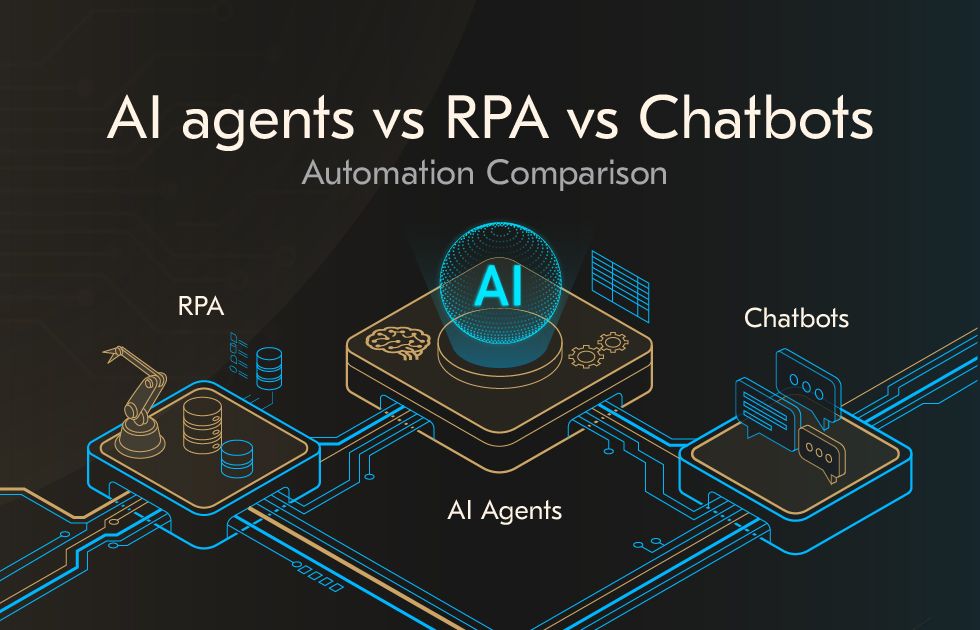
The difference from earlier automation – RPA bots, basic chatbots, workflow tools – is adaptability. RPA executes a fixed sequence. An AI agent handles exceptions. When something unexpected happens (and in enterprise workflows, it always does), an agent reasons through it rather than breaking.
The businesses seeing the highest AI agent ROI share two characteristics: high transaction volume and structured, repeatable workflows. The more a process runs at scale, the more an AI agent compounds its value. Let’s look at where that’s playing out, industry by industry.
AI Agents in Customer Service and Support
Customer service is where most enterprises start their agentic AI enterprise journey – and for good reason. The business case writes itself: high ticket volume, measurable resolution rates, clear cost-per-ticket benchmarks, and a customer experience that most teams know is underperforming.
Traditional automation got companies maybe 10-15% ticket deflection on the simplest FAQs. Modern, powered by AI agents, customer service platforms are resolving 60-70% of issues end-to-end, because they connect to the systems that actually hold the answer – CRM records, billing databases, inventory systems, policy documents – and act on them.
What enterprises are deploying:
- Tier-1 Resolution AI Agents handle the full conversation lifecycle for common issue types – billing disputes, password resets, order tracking, subscription changes – pulling from live data rather than static scripts, and escalating only when they hit something requiring genuine human judgment.
- AI Escalation Agents sit alongside human agents in real time, surfacing relevant customer history, suggesting next-best responses, auto-drafting case summaries, and pulling the right policy – cutting preparation time for complex tickets in half.
- Post-Interaction AI Agents automate follow-ups: satisfaction surveys, cross-system record updates, churn risk flagging based on sentiment, and triggered retention workflows when the signals are there.
- Proactive Outreach AI Agents monitor trigger events – payment failure, shipping delay, upcoming subscription renewal – and reach out with a resolution before the customer notices the problem.
- Voice and Chat Deflection AI Agents handle synchronous interactions across phone, chat, and messaging channels with the same system access and reasoning capabilities as async agents, at millisecond latency.
- AI Concierge Agents handle the full spectrum of guest communication before, during, and after a stay: pre-arrival preferences collection, restaurant and activity recommendations, in-stay requests (extra towels, late checkout, transport bookings), and post-departure feedback collection – all without routing through front desk staff.
Let’s see how leading companies leverage AI customer service agents in their daily operations.
For instance, ServiceNow deployed AI agents across their own customer operations and reported a 52% reduction in time required to handle complex service cases. The agents didn’t just speed up simple tickets – they compressed the multi-system coordination that complex cases require.
Salesforce reported that its Agentforce service agents handled more than 1.5 million support requests, with the majority resolved without human involvement and customer satisfaction remaining stable. That scale is what deployment of AI agents for customer service actually looks like at enterprise level.
Danfoss, the global industrial manufacturer, took this further. They deployed AI agents to handle their entire email-based order processing workflow. The agents read inbound order emails, validated them against inventory and pricing systems, processed compliant orders automatically, and flagged exceptions for human review. The result: 80% of transactional decisions automated, and average customer response time cut from 42 hours to near real-time. For a company processing thousands of orders daily, that’s a structural competitive advantage.
Acropolium in Action – AI Digital Concierge for a Multi-Property Hotel Group (Italy)
A hotel group operating multiple properties was drowning in a support problem that looked like an IT problem. Their legacy property management system required expensive on-premise maintenance, couldn’t be updated without downtime, and – critically – kept guest data siloed per property. When a guest returned to a different location in the group, the front desk had no record of their preferences. Every interaction started from scratch. Common guest requests – room service, late checkout, extra amenities, local recommendations – were routed manually through front desk staff around the clock, creating staffing pressure and inconsistent response times.
Acropolium migrated the system to a cloud-native SaaS platform and built an AI-driven digital concierge agent on top of it. The AI agent handles the full spectrum of common guest support interactions – answering inquiries, managing room service requests, processing front-desk transactions like late checkout or restaurant reservations, and delivering personalized recommendations based on the guest’s profile and stay history. Critically, guest data now flows across all properties in real time, so the agent has full context regardless of which location the guest is currently at. Genuinely complex or sensitive requests are routed to a human with the full interaction history already assembled.
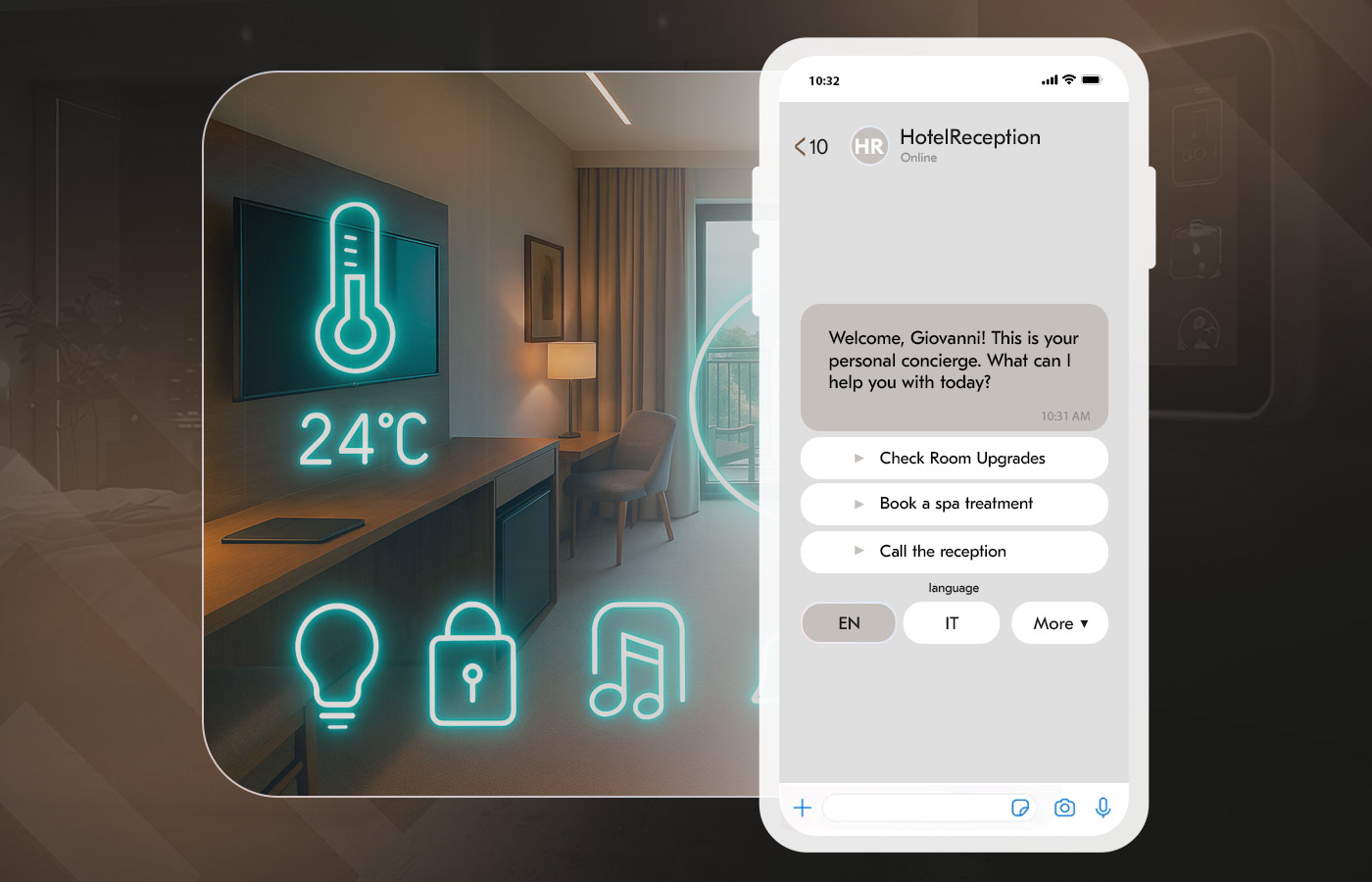 The result: guest services that previously required constant front desk staffing now run autonomously for the majority of interactions, human agents handle the requests that actually benefit from human judgment, and service consistency across properties is no longer dependent on individual staff memory or handover quality.
Moreover, guest satisfaction increased by 15% and operational efficiency improved by 30%, thanks to workflow automation and mobile accessibility.
💡 Pro Tip: Don’t start your AI customer service agent with your hardest ticket types. Identify the 3-5 issue categories that represent the highest volume and have a clear resolution path – billing adjustments under a defined threshold, order status, account resets. Get those working reliably first. Resolution rate on high-frequency tickets is your fastest path to a compelling business case and the data you need to justify expanding scope.
AI Agents in Hospitality
Hospitality is a deceptively complex industry for AI deployment. The guest experience is the product, which means every failure is immediately visible, often public, and directly correlated to revenue.
At the same time, hotels, restaurant chains, and travel operators run on notoriously thin margins with highly seasonal demand and a workforce that turns over at a rate most industries would find alarming. That combination – high stakes, volatile demand, margin pressure – is precisely where AI agents for business create disproportionate value.
Operators that have moved past the “AI chatbot on the booking page” phase and into genuine agentic AI deployments are seeing measurable improvements in occupancy rates, revenue per available room, and operational throughput – not just efficiency metrics, but top-line growth.
What enterprises are deploying:
- Revenue Management and Dynamic Pricing AI Agents monitor competitor rates, local events, search trends, booking velocity, and cancellation patterns in real time, and adjust room and service pricing dynamically across all channels without requiring a revenue manager to run reports and update rates manually. They also identify optimal upsell windows for room upgrades, dining packages, and spa reservations based on individual guest behavior.
- Self-Check-In and Identity Verification Agents guide guests through contactless arrival using facial recognition, biometric authentication, and ID verification – reducing front desk queues, enabling keyless room access, and processing check-ins at any hour without staffing overhead.
- Energy Optimization Agents analyze occupancy patterns, weather forecasts, and utility rates to automatically control HVAC, lighting, and power consumption across facilities – reducing energy costs without compromising guest comfort.
- Demand Forecasting and Staffing AI Agents combine booking data, event calendars, and historical patterns to predict demand at the department level – helping operations managers schedule the right number of housekeeping, F&B, and front desk staff for each shift rather than relying on static rosters.
- Post-Stay Engagement AI Agents automate review request sequencing, loyalty point notifications, personalized re-booking offers, and win-back campaigns – timed to the windows when guests are most likely to return.
Acropolium in Action – AI Hotel Revenue Management and Dynamic Pricing Platform
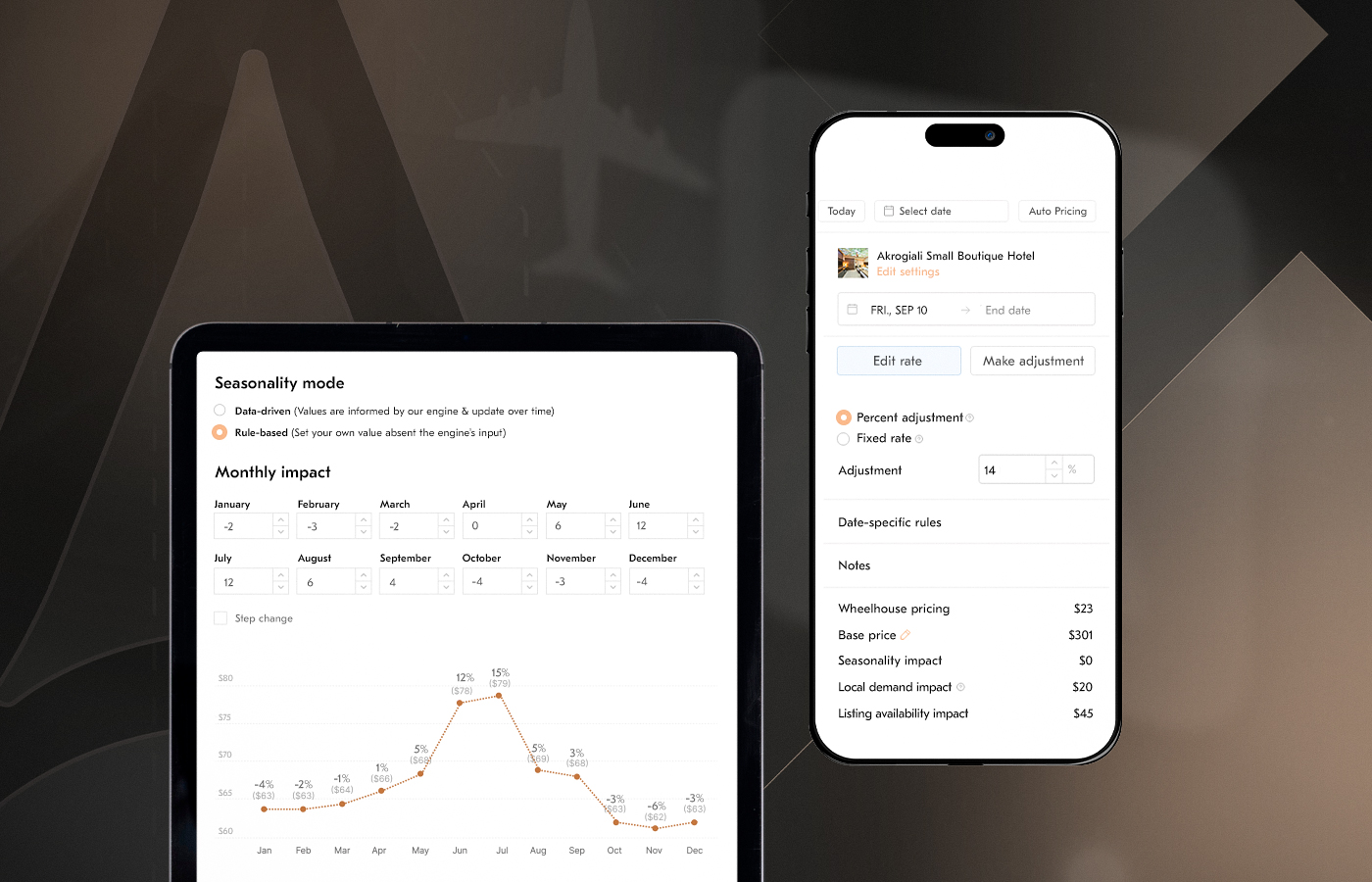
A Greek hotel chain with properties across urban and resort markets came to Acropolium with a pricing and service operations problem. Manual pricing processes couldn’t adapt quickly enough to market shifts, demand patterns varied significantly across properties, and decentralized revenue management meant inconsistent pricing strategies and missed revenue opportunities.
Acropolium built an AI-driven revenue management platform that uses real-time dynamic pricing algorithms analyzing competitor rates, local events, seasonal demand, and booking trends simultaneously. The system centralizes pricing decisions across all properties while allowing local market adjustments, integrates with existing CRM and reservation platforms, and identifies upselling and cross-selling opportunities based on guest behavior – wellness bookings, dining preferences, event packages.
The outcome:
12% increase in occupancy through real-time price optimization
30% reduction in manual pricing tasks freeing revenue managers for strategic work
15% revenue growth through dynamic, data-driven pricing that adapted faster than their previous manual approach allowed.
💡 Pro Tip: In hospitality, the guest experience is your product, and your review score is your marketing channel. Before deploying any guest-facing AI agent, define the exact handoff point where the agent stops and a human takes over – not as an exception, but as a designed experience. Guests who interact with an AI agent and feel heard will leave positive reviews. Guests who feel trapped in an AI loop that can’t solve their problem will leave negative reviews. The AI agent’s escalation behavior is not a technical detail; it’s a brand decision for sustainable growth.
AI Agents in Finance, Banking, and Insurance
Finance is simultaneously the highest-stakes and highest-potential sector for agentic AI systems. The workflows are structured and rule-governed. The volume is enormous. The cost of errors shows up in regulatory exposure and reputational damage. And the administrative burden – document processing, compliance monitoring, reporting, reconciliation – is unsustainable at scale without automation.
What enterprises are deploying:
- Contract and Document Analysis AI Agents read, extract, and flag issues in legal and financial documents at a pace no human team can match – surfacing non-standard clauses, identifying compliance gaps, cross-referencing regulatory requirements, and generating structured summaries attorneys can review in minutes instead of hours.
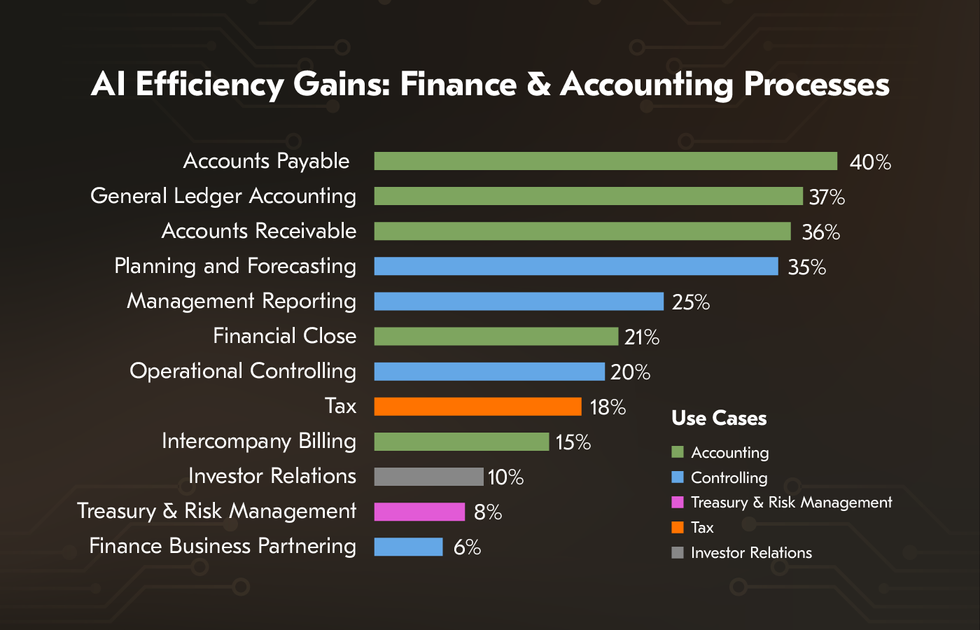
- Invoice Processing and Reconciliation AI Agents automate the full AP/AR cycle – reading invoices, matching to POs, flagging discrepancies, routing approvals, and posting entries – with no manual data entry at any step.
- Fraud Detection and Transaction Monitoring AI Agents analyze patterns in real time, cross-reference behavioral baselines, and flag novel combinations of signals that rule-based systems miss entirely.
- Regulatory Compliance AI Agents monitor regulatory change feeds, map updates to internal processes, identify gaps, and generate audit-ready documentation, so your compliance team knows what changed and what it means before the effective date.
- Financial Reporting AI Agents pull data from multiple systems, validate it, reconcile discrepancies, and generate structured reports – compressing monthly-close cycles and reducing the manual Excel-driven process that most finance teams still rely on. Roland Berger research found this combination delivers 33% faster invoice approvals and 25% shorter monthly closes.
- Claims Processing AI Agents in insurance handle the end-to-end lifecycle for straightforward cases: intake, eligibility verification, document review, payout calculation, and disbursement – reserving human adjusters for really complex or disputed claims.
- Investment Research AI Agents scan markets, earnings reports, news, and regulatory filings to surface intelligence for analysts, generating briefings that previously required hours of manual research.
- Expense Audit AI Agents read policy documents, review submitted expenses against policy rules, flag violations, generate approval or rejection notifications, and learn from each decision to continuously reduce false positives.
The JPMorgan COIN story – the benchmark for enterprise AI in finance:
JPMorgan Chase developed COIN (Contract Intelligence), an AI-powered platform built on NLP and machine learning to analyze commercial loan agreements and other legal documents. Before COIN, legal teams spent an estimated 360,000 hours annually reviewing these contracts manually – a process prone to fatigue-driven errors and dangerous inconsistency across reviewers.
COIN processes the same documents in seconds, with what JPMorgan describes as near-zero error rates – a standard that’s simply unachievable through manual review at scale. The system extracts key clauses, flags risk provisions, validates compliance requirements, surfaces anything unusual for attorney review, and generates structured outputs that replace hours of document work with minutes of verification. It now handles more than 12,000 contracts annually.
What’s significant about COIN is how it has evolved. The system has grown more robust over time, building on its accumulated training data to assume context more accurately, correct ambiguous inputs more effectively, and reduce the training burden on users. JPMorgan didn’t just automate a task – they built a system that gets better the more it processes. That compounding advantage is the strategic case for investing early rather than waiting for the technology to mature further.
JPMorgan’s broader AI stack reinforces this. The LLM Suite generative AI platform is now available to all employees – handling drafting, summarization, and decision support across the firm. Their LOXM system executes trades at optimal prices based on patterns learned from billions of historical trades. The DocLLM model – JPMorgan’s proprietary document intelligence model – outperformed GPT-4 combined with OCR on 14 of 16 common document intelligence benchmarks. JPMorgan is not experimenting with AI; they are constructing an AI-native institution.
Acropolium in Action – AI-Powered Fraud Detection Platform for a Digital Bank (Sweden)
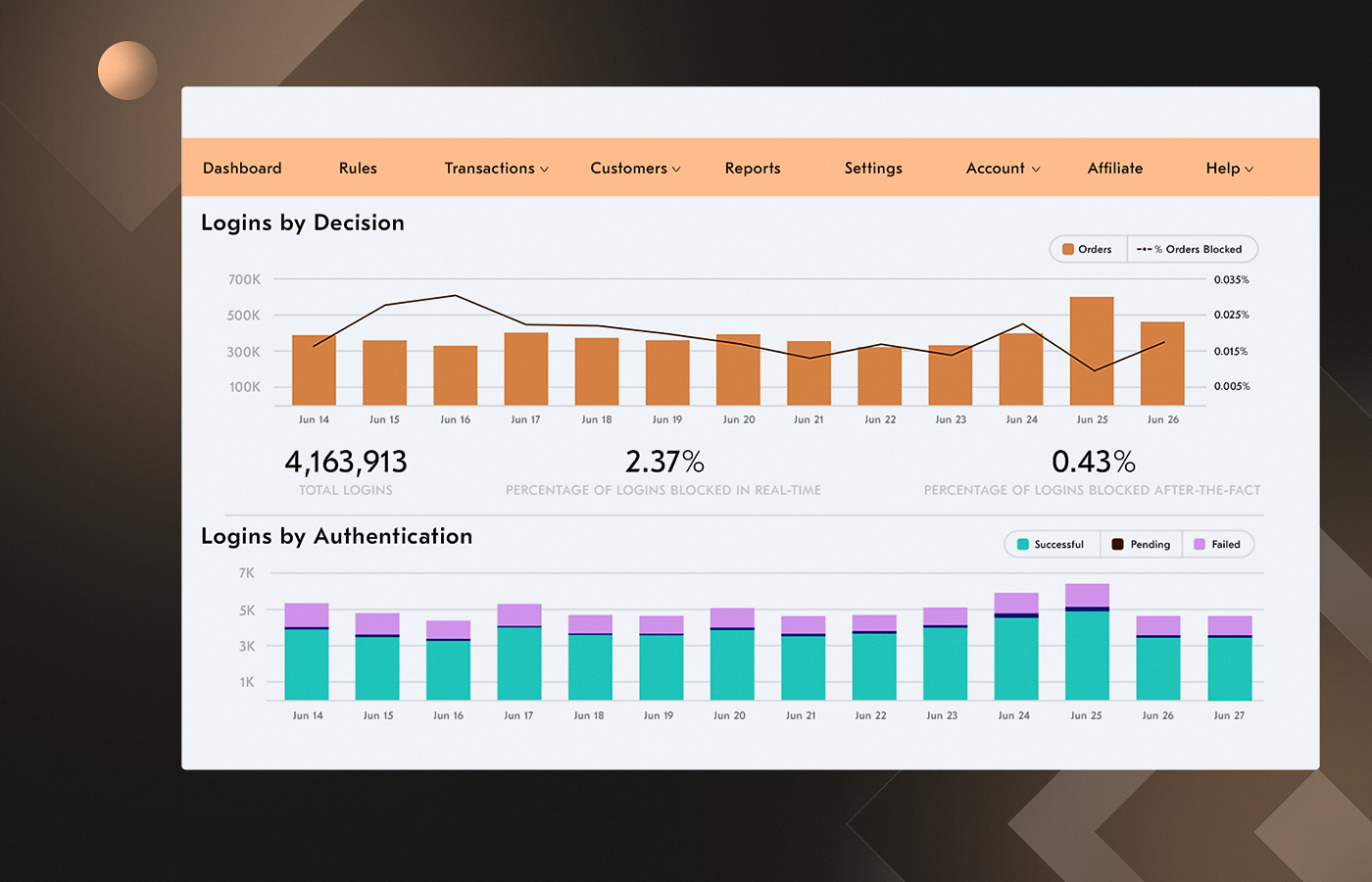
A fast-growing digital bank operating across accounts, payments, lending, and crypto trading came to Acropolium with dangerous visibility gaps in their fraud detection. Legacy systems operated in silos, leaving entire transaction channels unmonitored.
Acropolium built a unified AI fraud detection system using ML models, behavioral analytics, and a low-latency pipeline processing millions of events per hour with sub-second latency. The platform includes a behavioral risk scoring engine, automated AML/KYC screening (to comply with PSD2 and GDPR requirements) embedded directly into transaction workflows, and a real-time case management dashboard with automated escalation.
Results:
40% reduction in fraudulent transactions
30% increase in operational efficiency
25% decrease in compliance costs through embedded screening and streamlined audits.
💡 Pro Tip: In financial services, build your AI agent compliance governance layer before you build the agent. Define the action categories that require human approval (refunds above a threshold, account flags, credit decisions), the escalation triggers, and the audit trail requirements. Compliance-first design costs far less upfront than retrofitting it once regulators or auditors ask questions – and it makes internal approvals faster too.
AI Agents in Healthcare Operations
Healthcare has one of the largest automation opportunities and one of the most acute pain points: clinicians are spending more time on documentation than on patients. A physician in a typical U.S. health system spends 45–55% of their working day on administrative tasks. That’s not a technology problem waiting for a solution – it’s a productivity crisis that AI agents are already solving.
What enterprises are deploying:
- Ambient Clinical Documentation Agents listen to patient-provider conversations, generate structured clinical notes, pull relevant EHR history, handle ICD coding, and route completed notes for physician review – turning a 20-minute post-visit task into a 2-minute verification.
- Prior Authorization AI Agents extract clinical data from records, complete payer-specific forms, submit requests, track approval status, and manage appeals automatically – eliminating days of manual coordinator work per case.
- Care Coordination AI Agents manage referrals, follow-up scheduling, care gap identification, and cross-team communication autonomously – finding specialist availability, checking insurance coverage, sending referral documentation, and updating the full care team without manual coordination.
- Remote Patient Monitoring AI Agents analyze continuous device data, detect readings approaching clinical thresholds, and escalate to clinical staff with assembled context – converting reactive emergency responses into proactive interventions.
- Revenue Cycle AI Agents submit claims, track payer responses, identify denial patterns, auto-appeal within defined parameters, and flag systemic payer issues for account management.
- Pharmacy and Supply Inventory AI Agents monitor stock levels, predict consumption based on census and acuity data, trigger replenishment, manage expiry risk, and redistribute inventory across facilities.
- Appointment Scheduling and Patient Engagement AI Agents handle intake, scheduling, pre-visit reminders, post-visit follow-up, and no-show re-engagement across the channels patients actually use.
What AtlantiCare proved in a 50-provider pilot:
AtlantiCare, a health system in Atlantic City, New Jersey, deployed Oracle Health’s Clinical AI Agent focused on ambient documentation. The rollout covered 50 providers across multiple specialties.
The 80% adoption rate was remarkable. Healthcare technology adoption is notoriously difficult; most EHR implementations struggle to reach this level of sustained usage even after extended rollouts and mandatory training. The fact that four in five providers were consistently using the agent tells you something essential about the quality of the experience and the genuine time savings.
The measurable result: a 42% reduction in documentation time per provider, translating to roughly 66 minutes saved per working day. Multiply that across 50 providers, across 250 working days annually, and you’re looking at more than 800,000 minutes of physician time redirected from paperwork to patient care – just from a pilot group. The system-wide deployment math is significant. Acropolium in Action – Hospital Predictive Analytics for a Multi-Facility Hospital (Belgium)
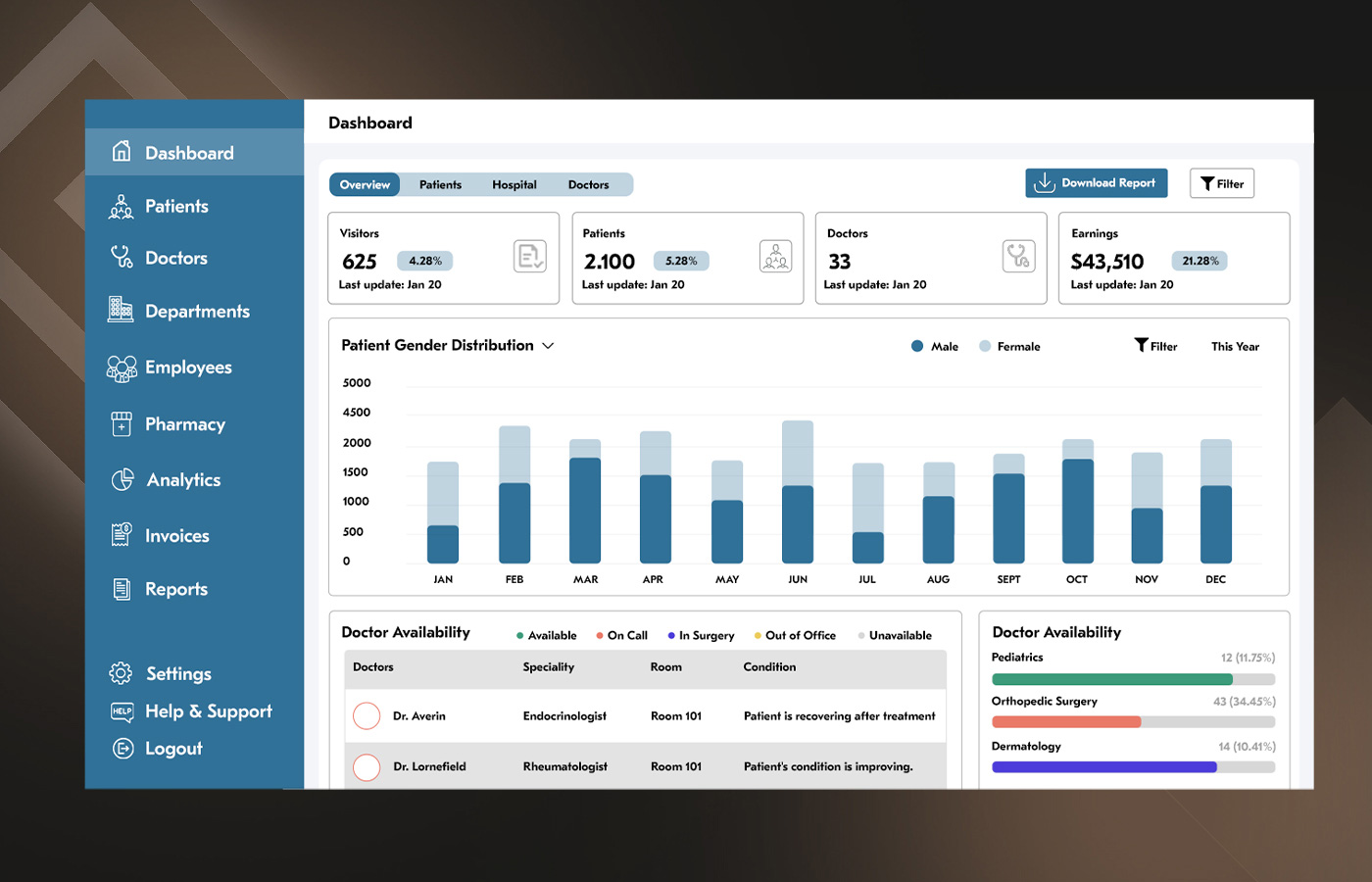
A fast-growing hospital group was struggling with the operational consequences of rapid expansion: unpredictable patient demand, staff scheduling mismatches, equipment bottlenecks, and rising costs. Manual forecasting couldn’t keep pace.
Acropolium built an AI-powered predictive analytics platform that integrated with the hospital’s EHRs, hospital management system, and IoT-connected medical devices.
ML models analyzed historical data and real-time signals to forecast patient demand across facilities, automate staffing scheduling, and optimize allocation of equipment – from ICU beds to surgical suites. The system allows administrators to plan proactively for demand surges rather than responding to them.
Full HIPAA and GDPR compliance was built into the architecture from the start, a non-negotiable requirement across the hospital’s national jurisdictions.
Results:
25% increase in overall efficiency thanks to enhanced resource management and optimized use of hospital equipment;
30% decrease in delays thanks to reduced patient wait times and quicker access to medical care;
15% boost in satisfaction among staff thanks to balanced workloads and prevented burnouts.
💡 Pro Tip: Healthcare AI agents live or die on EHR integration quality. Before scoping the agent, audit your EHR’s API capabilities, data completeness, and update latency. Many clinical documentation projects stall not because the AI fails, but because the EHR data the AI agent needs is inconsistently structured or behind a slow API. Invest in the data pipeline as early as you invest in the model – they’re equally important to the outcome.
AI Agents in Supply Chain and Logistics
Supply chains run 24/7, across dozens of systems, with constant real-world variance – weather, port disruptions, demand spikes, supplier failures, transportation constraints. They’re precisely the environment where human decision-making at scale hits a hard ceiling and AI agents for business create structural advantage that compounds over time.
What enterprises are deploying:
- Demand Forecasting AI Agents integrate ERP data, POS signals, weather forecasts, social media trends, promotional calendars, and competitor pricing to generate continuously updated demand projections – live models, not static monthly spreadsheets.
- Inventory Optimization AI Agents monitor stock levels across distribution networks, detect impending stockouts or overstock conditions, calculate optimal reorder points, trigger replenishment automatically, and reroute inventory between locations as regional demand shifts.
- Supplier Management AI Agents handle long-tail supplier relationships at a scale procurement teams can’t manage manually – tracking contract terms, initiating renewal conversations, collecting compliance documentation (sustainability data, DEI reports, pricing sheets), and flagging suppliers whose terms have drifted from policy.
- Transportation and Routing AI Agents dynamically optimize route plans in real time based on fuel prices, traffic, weather, carrier capacity, and delivery windows – automatically rebooking when disruptions occur, without waiting for a coordinator to notice the problem.
- Warehouse Operations AI Agents optimize labor allocation, workflow sequencing, picking routes, and throughput forecasting based on real-time inbound and outbound data – dynamically adjusting as conditions change through the operating day.
- Exception Management AI Agents identify when disruptions break predefined workflow rules, reason across systems to evaluate the best response, select an action, and execute it – handling the kind of supply chain exceptions that previously required senior operations staff to manually diagnose and resolve.
For instance, Uber Freight deployed AI agents across their freight coordination operations and achieved a 10–15% reduction in empty miles – trucks moving without cargo – across $20 billion in freight moved annually. The same deployment cut support wait times from 5 minutes to 30 seconds by automating the most common carrier and shipper queries. The empty miles reduction alone represents hundreds of millions of dollars in cost and emissions savings at that scale of operations. Acropolium in Action – Supply Chain Analytics Platform for a Logistics Operator (Germany)
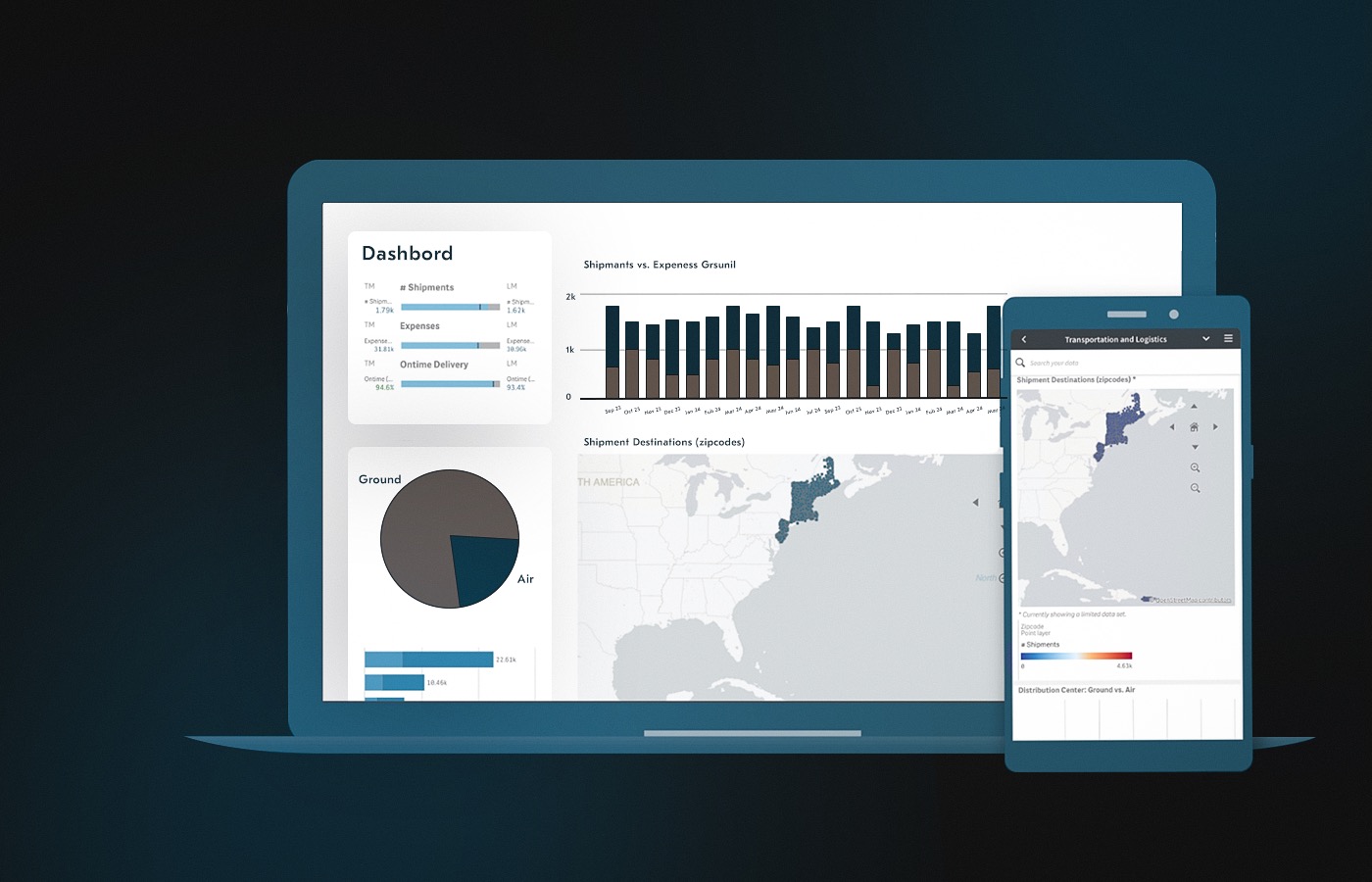
A leading logistics and transportation company managing extensive warehouse and hub networks across Europe had a fundamental data problem: supply chain data was fragmented across ERP systems, IoT sensors, GPS devices, and external databases. The team couldn’t get a complete operational picture, which prevented trend identification, process optimization, and real-time decision-making.
Acropolium built a comprehensive AI-powered supply chain analytics platform that centralized and integrated data from all disparate sources. The platform featured predictive analytics and ML models for demand forecasting, real-time monitoring dashboards, automated anomaly alerts, and robust data security throughout the lifecycle.
Results:
20% reduction in system downtime;
27% increase in operational efficiency in order processing and service delivery;
15% decrease in inventory costs through optimized demand forecasting;
22% increase in customer retention through improved service consistency.
💡 Pro Tip: The most common failure in supply chain AI agent deployments is building the agent before fixing the data. AI Agents are only as good as the signals they can read. If your inventory data in the ERP lags by 24 hours, a real-time optimization agent is running on stale information. Prioritize data pipeline latency and ERP integration quality before agent logic. A well-integrated simple AI agent consistently outperforms a sophisticated AI agent working with bad data.
AI Agents in Retail and E-Commerce
Retail is moving faster than almost any other sector. NVIDIA’s 2026 State of AI in Retail and CPG survey found that 47% of respondents are using or assessing agentic AI, while 90% plan to increase their AI budgets in 2026. This momentum is driven by a straightforward commercial reality: thin margins and high volume mean that any improvement in conversion, inventory efficiency, or operational cost has immediate P&L impact.
What enterprises are deploying:
- Personalization AI Agents analyze browsing behavior, purchase history, real-time session signals, and contextual factors to surface the right product at the right moment – adaptive reasoning about what this specific customer is trying to accomplish now, not static “also bought” logic.
- Dynamic Pricing AI Agents monitor competitor pricing, demand signals, inventory levels, and margin targets in real time, adjusting prices within defined guardrails without requiring a pricing analyst to run reports and update a spreadsheet.
- Returns Processing AI Agents handle the full returns lifecycle: receiving requests, checking eligibility, generating labels, initiating refunds, updating inventory, and routing physical returns to the appropriate processing stream – automatically.
- Merchandising and Trend Detection AI Agents track social media, search query data, and competitor launches to identify emerging demand signals before they appear in your own sales data, feeding them into buying and assortment decisions.
- Post-Purchase Engagement AI Agents manage the relationship after the sale: shipping notifications, delivery confirmation, review requests, cross-sell recommendations, and re-engagement sequences calibrated to natural repurchase cycles.
- Cart Abandonment AI Agents identify high-intent abandoners, reason about the most likely friction point – price, shipping cost, product uncertainty – and deploy the right intervention rather than blasting a generic promo to everyone who left.
- Inventory Rebalancing AI Agents shift products between locations based on demand variance, preventing regional stockouts while reducing overstock carrying costs across the network.
- Loyalty and Retention AI Agents monitor engagement signals, identify at-risk accounts based on behavioral patterns, and trigger personalized retention interventions calibrated to what’s most likely to work for each customer segment.
Amazon and Walmart define the benchmark
Amazon’s AI recommendation engine remains one of the most mature deployments of product intelligence agents, influencing an estimated one-third of the company’s online sales. Beyond simply displaying products, the system analyzes session context, inferred purchase intent, timing, and stock availability to suggest items most relevant to each customer in real time. Its continued commercial impact is a major driver of AI investment across the retail sector.
Walmart’s AI capabilities now operate across multiple inventory and supply chain systems. Their platform continuously reads demand signals from stores and fulfillment centers, adjusting replenishment schedules and rerouting stock in near real time.
Their Trend-to-Product multi-agent system monitors social media and search trends, generates product concepts, and accelerates them into sourcing and prototyping. Processes that traditionally required several months can now be completed in weeks, enabling faster responses to trends that may peak within a 30-day window – a significant competitive advantage compared with manual operations.
During peak periods like Black Friday, retailers leveraging AI-driven agents report higher conversion rates than peers using conventional automation. Reuters reported that, globally, AI and agents influenced $14.2 billion in online sales on 2025 Black Friday.
When considered over a full retail calendar, including seasonal peaks, promotions, and ongoing personalization, such improvements translate into meaningful increases in revenue and customer engagement.
Acropolium in Action – AI-Driven Retail Platform for Multi-Channel Retail Brand (Ireland)
An established retailer with a presence in e-commerce, brick-and-mortar stores, and mobile platforms had a legacy e-commerce software that had become a competitive liability. Outdated functionality, fragmented sales channels creating inconsistent customer experiences, and manual inventory processes that couldn’t keep pace with modern digital retail demands were all holding the business back.
Acropolium rebuilt the platform as a unified AI-powered omnichannel retail solution: consolidated all sales channels into a coherent customer experience, implemented real-time analytics and advanced inventory management, added AI-driven personalization for mobile and web, and created automatically synchronized workflows across channels. The result was a modern, scalable retail system able to adapt to traffic spikes, deliver personalized experiences across touchpoints, and give the operations team the real-time visibility needed for faster merchandising decisions. 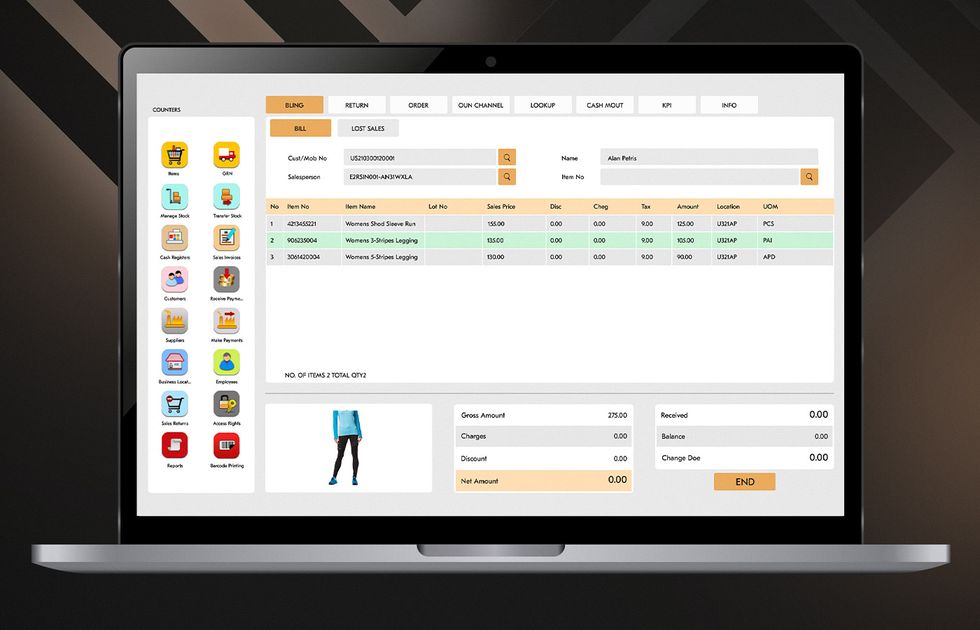
The outcome also included measurable improvements such as:
25% faster order fulfillment
22% increase in customer retention
18% increase in overall revenue.
💡 Pro Tip: When developing retail IT solutions, start with the use case that has the clearest conversion signal, not the most impressive-sounding technology. Cart abandonment agents and personalization agents both generate data you can measure in revenue terms within weeks of launch. Trend detection and merchandising agents take longer to demonstrate ROI because product development and sourcing cycles are longer. Get a quick win with conversion-linked use cases first, then use that success to fund the longer-horizon deployments.
AI Agents in Automotive
The automotive industry sits at an unusual intersection for AI agents: it combines a traditional high-consideration retail sales process with increasingly complex product lines, large aftersales service operations, and a fast-emerging EV infrastructure layer that needs entirely new operational tooling. Each of those dimensions has distinct AI agent use cases, and companies that address them together are building a compounding advantage over dealers and OEMs that are treating them separately.
What enterprises are deploying:
- Vehicle Configuration and Sales AI Agents guide buyers through model selection, specification choices, financing options, and trade-in valuations in real time – handling the early stages of a purchase journey that previously required a salesperson’s time and a showroom visit, and qualifying buyers before they ever speak to a human.
- Test Drive Scheduling and Follow-Up AI Agents manage the booking logistics for test drives across locations, send personalized confirmations and reminders, collect pre-visit preferences, and handle post-test-drive follow-up with tailored offers – turning a frequently manual coordination task into an automated experience.
- Inventory Intelligence Agents monitor vehicle stock levels across dealer locations, track which configurations are moving versus stagnating, identify supply-demand mismatches, and trigger reallocation or ordering recommendations – giving dealer networks real-time visibility into inventory that previously required daily manual reporting.
- Aftersales Service Scheduling AI Agents handle service appointment bookings, recall notifications, maintenance reminders based on mileage and vehicle health data, and post-service follow-up – keeping the customer relationship active between purchase events and driving aftersales revenue.
Dynamic Pricing AI Agents for dealer networks optimize vehicle pricing based on local market demand, competitive positioning, inventory age, and financing incentive availability – replacing the manual pricing reviews that most dealerships run weekly or monthly.
EV Infrastructure Management AI Agents monitor charging station availability and health across networks, predict demand based on traffic and usage patterns, manage load balancing to prevent grid overload, and trigger maintenance for underperforming stations – essential infrastructure for operators scaling EV charging networks.
Acropolium in Action – Smart EV Charging Management App (UK)
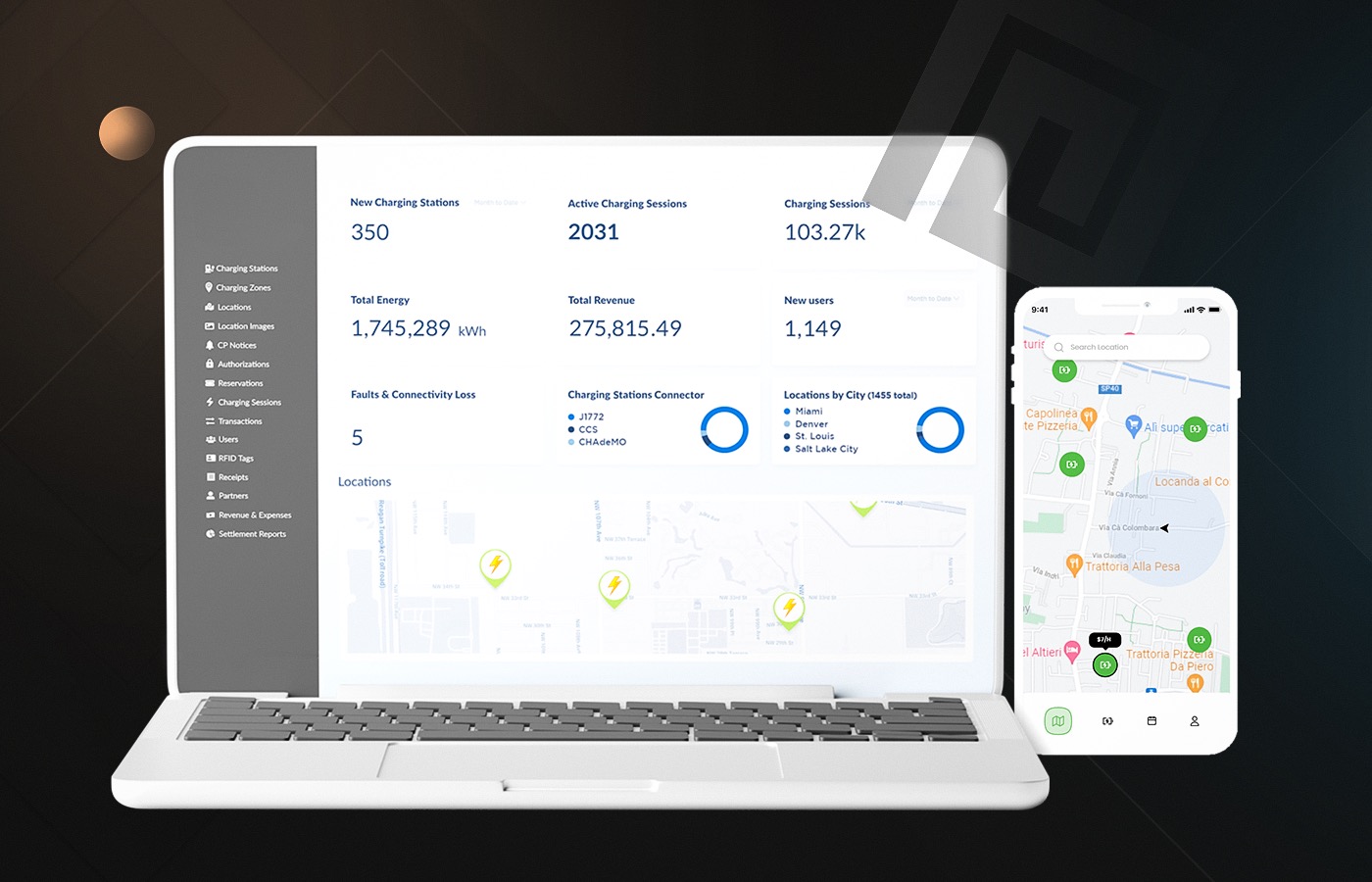
A UK-based EV charging infrastructure operator serving urban centers, highways, and businesses needed to manage a rapidly growing network of stations while delivering a reliable charging experience for thousands of drivers daily. The two core challenges were operational – keeping stations healthy and optimizing grid load, and commercial – supporting white-label partners and managing loyalty programs across the network.
Acropolium built a comprehensive AI-powered app combining a station management CRM, an iOS and Android customer app, and smart charging grid integration. AI-driven load balancing dynamically distributes charging demand to prevent grid overload during peak periods, while dynamic pricing responds to demand patterns in real time. The monitoring layer tracks station health continuously and flags maintenance needs before they cause downtime.
 Outcomes:
30% reduction in peak grid demand through load balancing;
22% savings on electricity costs through energy management optimization;
50% increase in customer retention thanks to user-friendly app with loyalty programs;
45% revenue growth thanks to dynamic pricing.
💡 Pro Tip: Automotive AI agents that touch the buying journey need to be calibrated to the pace of the customer, not the pace of the technology. Car buyers research for weeks or months before contacting a dealer. Your agent needs to recognize where someone is in that journey and respond accordingly – informational and low-pressure for early-stage researchers, specific and conversion-focused for buyers showing buying signals. An AI agent that pushes for a test drive booking on a first-contact inquiry will alienate the lead. Map the buyer journey stages explicitly in your agent’s logic before you write a single prompt.
AI Agents in Human Resources
Recruitment, onboarding, employee support, and policy management generate large volumes of repetitive tasks that are difficult to scale efficiently with traditional automation. AI agents help resolve this tension by managing high-volume operational work – screening candidates, coordinating interviews, answering employee queries, and maintaining records – while surfacing insights that support better human decision-making.
The AI agents handle the volume and organization of information; HR professionals retain responsibility for judgment, context, and employee relationships.
HR use cases running in production:
- Recruitment Pipeline AI Agents screen applications against role requirements, score candidates on defined criteria, coordinate interview scheduling across time zones, collect and summarize structured feedback, and advance qualified candidates – compressing weeks-long processes into days.
- Onboarding AI Agents deliver personalized onboarding sequences: the right training modules in order, policy acknowledgments, equipment provisioning requests, benefits enrollment, and answers to the constant stream of “where do I find X” questions that flood HR inboxes in someone’s first 30 days.
- Performance Management AI Agents analyze feedback data, flag early attrition signals, identify development needs before they become performance problems, and surface patterns in engagement data that inform management decisions.
- Workforce Planning AI Agents model headcount scenarios, analyze skill gaps across the organization, and generate hiring recommendations based on projected workload and historical attrition patterns.
For instance, Unilever reported that in 2025 it shifted from time-intensive, people-centred HR processes to solutions powered by technology and AI. The company deployed chatbots as the first point of contact for most HR matters, helping make back-end HR operations more efficient.
💡 Pro Tip: The biggest risk in AI HR agent deployments isn’t accuracy – it’s perceived fairness. If your recruitment AI agent screens candidates, document how the scoring criteria were defined, who reviewed them, and how the system was validated for bias before deployment. This protects you when a candidate or regulator asks questions. Build the explanation layer into the system design, not as an afterthought.
AI Agents for Marketing
Marketing is where AI agent’s ROI shows up most directly on the revenue side of the P&L – and where the gap between early movers and laggards is widening fastest. A large-scale study of more than 2,300 participants found that human-AI teams achieved 60% higher productivity per employee without sacrificing performance. The teams also spent 23% more time on content-creation tasks and 20% less time on direct text editing.
Marketing use cases running in production:
- AI Agents for Content Creation take a brief or long-form piece and generate derivative content across formats – LinkedIn posts, email sequences, ad variations, SEO landing pages, video scripts – maintaining brand voice and adapting tone per channel.
- Campaign Performance AI Agents monitor ad performance continuously, identify underperforming creative or targeting, pause low-performing spend, and reallocate budget toward what’s working.
- SEO Monitoring Agents track keyword rankings, competitor content moves, backlink changes, and SERP shifts – surfacing specific action recommendations rather than data exports requiring analyst interpretation.
- Audience Segmentation AI Agents analyze behavioral and demographic data to identify high-conversion micro-segments and automatically create them in your marketing platform – collapsing weeks of analyst work into hours.
- Competitive Intelligence Agents monitor competitor websites, press releases, job postings, and social channels to surface strategic signals – new product launches, hiring surges, pricing changes – without anyone manually tracking dozens of sources.
💡 Pro Tip: CRM data quality is the hidden dependency for almost every marketing agent use case. Lead scoring, outreach personalization, and deal risk monitoring are only as good as the contact and activity data they read. Before deploying, run a CRM completeness audit – what percentage of contacts have a verified email, a job title, a last activity date? That audit result will tell you whether you need a CRM hygiene agent first, as the prerequisite for everything else.
AI Agents in Energy and Utilities
Energy and utilities is a sector where the consequences of getting AI wrong are measured in megawatts of lost production, regulatory violations, and infrastructure failures, which is precisely why it’s also one of the sectors seeing the most rigorous and well-funded agentic AI deployments. AI agents that shift operators from reactive to predictive – detecting failures before they happen, optimizing output continuously, and managing grid balance automatically – pay for themselves rapidly at the asset scale most energy companies operate.
What enterprises are deploying:
- Predictive Maintenance AI Agents monitor equipment sensor data continuously – vibration, temperature, pressure, electrical output, RPM – identifying patterns that precede failures and scheduling maintenance proactively during planned windows rather than in emergency response mode.
- Asset Performance Monitoring AI Agents track the real-time output of energy assets – wind turbines, solar panels, substations, battery storage units – against expected performance baselines, flagging underperformance and diagnosing root causes across a portfolio of assets that no team could manually monitor at equivalent granularity.
- Energy Production Forecasting Agents combine historical generation data, weather forecasts, grid demand signals, and market pricing to predict energy production at the asset and portfolio level – enabling operators to optimize dispatch decisions, storage charging cycles, and market participation.
Environmental and Regulatory Compliance AI Agents monitor operational data against permit conditions, emissions thresholds, and safety regulations – generating real-time alerts when conditions approach limits, and compiling compliance documentation automatically for regulatory reporting.
Energy Trading and Market Optimization AI Agents monitor wholesale electricity markets, analyze pricing signals, and execute trading decisions within pre-approved parameters – optimizing revenue from flexible assets like batteries and demand-response programs. Acropolium in Action – AI Renewable Energy Platform (USA)
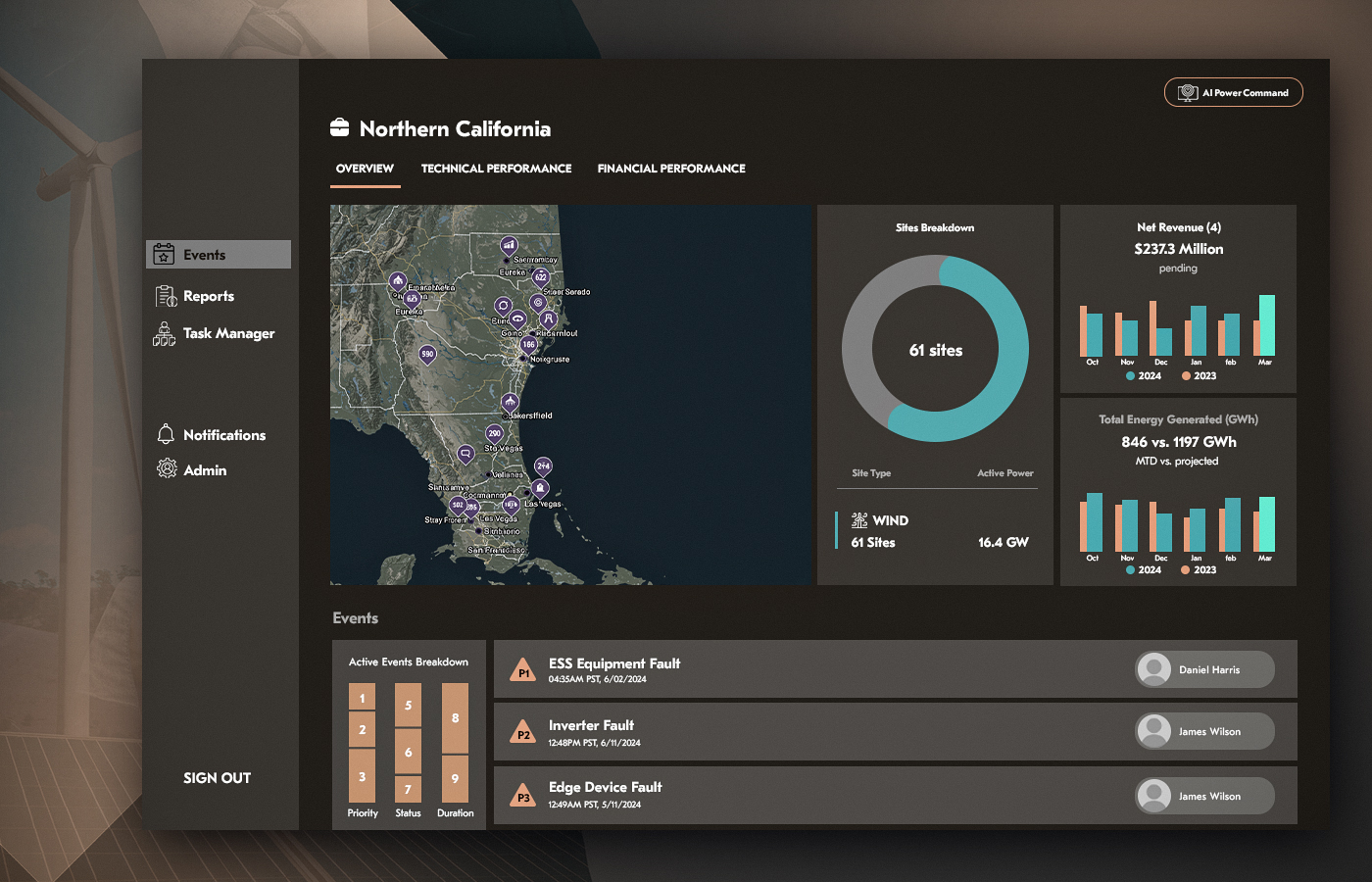
A leading US energy provider managing wind farms across multiple locations was operating with data silos – each facility used different monitoring systems, and consolidating operational data into a coherent picture for decision-making required significant manual effort. Without real-time insights across the portfolio, optimizing asset performance and predicting failures was slow and inconsistent.
Acropolium built an AI-powered RES management platform that unifies real-time data from all wind energy systems into a single analytical environment, with AI forecasting models that improve production predictions by integrating historical generation data with real-time weather signals. Predictive maintenance modules continuously monitor asset health and flag early signs of wear before they cause unplanned downtime. The platform automates data collection and performance analysis entirely, freeing engineers to focus on decisions rather than report generation.
 The outcomes:
5–10% improvement in energy production efficiency through better asset utilization;
15–20% revenue growth driven by improved forecasting accuracy, reduced energy waste and enhanced market positioning;
10–15% growth in the client base as the operator’s improved reliability and reporting capabilities became a competitive differentiator in commercial contracts.
How to Choose the Right AI Agent Use Case for Your Enterprise
To select the most impactful AI agent use cases, enterprises must move beyond novelty and focus on operational leverage. The ideal starting point lies at the intersection of high-volume repetition, data richness, and “latency gaps” – those points in a process where human delays stall the entire value chain, such as manual recruitment screening or supply chain rerouting.
When evaluating potential deployments, prioritize the 80/20 Rule of Automation: identify workflows where an agent can manage 80% of the transactional density (data entry, scheduling, and initial triage), thereby freeing your human specialists for the 20% of high-value reasoning and final decision-making. This “Agent-plus-Human” model ensures that AI handles the cognitive “grunt work” while humans retain oversight.
Furthermore, assess your data readiness. An AI agent is only as effective as the real-time signals it can “read.” Choose use cases with existing, clean data streams, such as inventory logs, customer support history, or structured HR databases. By targeting a “contained” success – like reducing empty miles in logistics or time-to-hire in recruitment – you create a commercial proof point that proves ROI.
The organizations with the highest AI agent ROI aren’t the best planners – they’re the best iterators. Deploy a scoped version. Measure rigorously. Fix what breaks. Expand. That cycle, repeated, is exactly how to integrate AI into business.
Why Enterprises Trust Acropolium to Build AI Agents
Most enterprise AI initiatives stall at the same critical juncture: the Proof of Concept (PoC) succeeds in a vacuum, but fails in the friction of reality. In production, integrations are messier, edge cases are more volatile, and governance requirements are non-negotiable. When the timeline starts to slip, the gap between a “chatbot” and a functional AI Agent becomes painfully clear.
Acropolium engineers AI agentic systems designed for production from day one. We don’t build prototypes that require a total rebuild to scale; we architect autonomous workflows that thrive within complex enterprise ecosystems.
Production-First Architecture: We design data structures and tool integrations for your actual systems, not sanitized sandboxes.
Deep Governance & Safety: Guardrails, audit logging, and “Human-in-the-Loop” (HITL) protocols are incorporated into the agent’s core logic, ensuring compliance is never an afterthought.
Resilience Testing: Our AI agents undergo rigorous stress tests, including adversarial inputs and high-load simulations, to ensure stability in unpredictable real-world conditions.
End-to-End Observability: With built-in telemetry, you gain total visibility into agent reasoning, decision-making paths, and performance bottlenecks.
Our AI software development practice covers the entire lifecycle – from initial agentic design to the continuous feedback loops that allow your AI agents to learn and improve.
By having deep domain expertise in healthcare software development, fintech software development, logistics software development, and other industries we navigate your industry’s specific regulatory constraints and integration patterns before the first line of code is written. At Acropolium, we don’t just build AI agents; we deploy structural competitive advantages.
Contact us to see what AI agent benefits your business can unlock today. From automating 80% of your transactional volume to compressing months-long logistics cycles into days, our team is ready to build the custom agentic architecture your enterprise requires for 2026 and beyond. Let’s move your AI strategy from a successful pilot to a resilient, high-scale production reality.





![AI in Web Development: [Benefits, Trends & Use Cases]](/img/articles/ai-and-web-development-why-and-how-to-leverage-ai-for-digital-solutions/img01.jpg)