In logistics, a delay can quickly turn into extra costs. Beacon’s 2024 Supply Chain Visibility Capabilities Report found that 58% of respondents had trouble identifying shipments at risk of demurrage, detention, chargebacks and other penalty fees caused by delays.
The problem is often simple: the information is spread across different systems, companies and spreadsheets. Keeping everyone on the same page becomes harder as a shipment moves through more hands. This is where blockchain in logistics comes into the picture. Rather than replacing the systems companies already use, it can give supply chain partners a shared record of selected events and transactions.
In this article, we look at how blockchain is being used in logistics, where it can help, and where its limitations lie.
Key Takeaways
In Beacon’s 2024 report, 58% of respondents said they struggled to identify shipments at risk of demurrage, detention, chargebacks, and other delay-related costs quickly enough.
When blockchain is connected to GPS, IoT sensors, RFID and the tracking systems companies already use, it can give supply chain partners a shared record of important events. That makes it easier to see what is happening with a shipment, keep track of inventory and sort out disputes when different parties have different records.
Interest in this technology is also reflected in market forecasts. The Insight Partners expects the blockchain market for transportation and logistics to grow from $2.03 billion in 2025 to $13.01 billion by 2034. Future Market Insights uses a broader definition of the market and forecasts growth to $46.08 billion by 2036.
automated agreements take this a step further by running predefined actions automatically when the agreed conditions are met. For example, they can trigger a payment once a delivery has been confirmed. The exact benefit depends on the contract design, the quality of the incoming data, and the readiness of all parties to use the same process.
What is Blockchain in Logistics?
Blockchain in logistics is a shared record that companies in the supply chain can use to track important events in one place. Instead of suppliers, carriers, warehouses, and distributors keeping separate versions of the same information, authorised participants can refer to the same history of a shipment.
For example, the record may show when goods left a warehouse, changed hands between carriers, passed customs, arrived at a port, or were delivered to the customer. It can also store supporting details such as delivery documents, temperature readings, or inspection results.
The information is added in chronological order. Each record is connected to the previous one, making it easier to notice if someone changes older information. Before a new record is added, the network checks it against agreed rules. This gives participants a clearer way to see what happened to a shipment, when it happened, and which party added the information.
Market research consistently projects strong growth for the segment. Insight Partners forecasts the blockchain in the transportation and logistics market to grow from $2.03 billion in 2025 to $13.01 billion by 2034 at a CAGR of 26.14%. Future Market Insights, applying a broader market scope, projects growth from $4.1 billion in 2025 to $46.08 billion by 2036 at a CAGR of 24.6%. The UK and France are identified as the fastest-growing national markets in the FMI forecast.
What Are the Benefits of Using Blockchain in Logistics?
A shared ledger can reduce duplicate reconciliation and make selected disputes easier to investigate, provided participants use common data standards and governance rules. The potential benefits span every link in the chain, from enhancing transparency at origin to reduced costs at settlement.
Here’s why blockchain is important in supply chain management and the broader logistics industry.
Improved Efficiency
Blockchain offers a powerful foundation for streamlining processes across domestic and international freight. Immutable, auditable records support the automation of customs clearance, compliance documentation and handoff verification when integrated with existing logistics and regulatory systems, cutting processing time and replacing paper-based processes that introduce delay and error. Fewer delays in documentation translate directly into faster cycle times for transport companies and their customers.
Blockchain can automate supply chain steps that previously required manual approval. It also gives authorised participants a clear record of what happened at each stage.
Full Shipment Visibility
When connected to real-time tracking systems, blockchain can provide a shared record of selected shipment events.
Disputes become easier to resolve when every party involved is looking at the same unalterable record of what happened and when, rather than reconciling competing spreadsheets or email chains. This is one of the clearest advantages of transparency and traceability in modern supply chain operations.
Automated Agreements
Another crucial feature of blockchain in logistics in the use of automated agreements. These automated contracts trigger actions when agreed conditions are met: for instance, releasing payment after a delivery is confirmed.
By automating predefined business rules, automated agreements can reduce manual processing steps and the need for certain intermediaries to verify transactions and execute contract terms. Once deployed, they execute the programmed conditions automatically.
Blockchain can provide a tamper-resistant environment for recording transactions and enforcing programmed rules, although the security of the overall system still depends on the smart contract code, access controls and external data sources.
Trust Across Partners
Because authorised participants can work from a shared record of relevant shipping events and documents, the information disputes that typically slow multi-party logistics operations: conflicting manifests, contested delivery timestamps, mismatched invoices – are significantly reduced. Enhancing transparency across all parties involved is one of the core reasons supply chain management teams are moving away from siloed, incompatible systems.
Once written to the chain, records cannot be altered, which makes the audit trail only as reliable as the validated data that went in. This reliability is what makes distributed ledger technology so attractive for supply chain operations that span multiple jurisdictions and counterparties.
Fraud Prevention
Any attempt to falsify cargo weights, manipulate delivery timestamps, or submit duplicate invoices produces a detectable inconsistency against the existing chain – one that every authorised participant can see in real time. Enhancing transparency in this way makes the blockchain ledger a powerful deterrent against the types of fraud that have long undermined confidence in global supply chains.
Blockchain can also support product authentication and intellectual property protection across the supply chain. Branded goods, proprietary formulas, and licensed designs can be linked to verified records that show where they came from and how they moved through the network.
This makes it easier for authorised partners to check whether a product is genuine, spot unauthorised changes or diversions, and reduce the risk of counterfeiting.
Blockchain in Logistics: Practical Uses
Blockchain can be implemented in logistics in several ways. Let’s consider the major ones and look at its benefits for the logistics industry and the broader supply chain industry.
Supply Chain Transparency & Traceability
The low level of reliable verifiable information is a persistent problem in global supply chains – a direct consequence of the lack of transparency and traceability in the industry. If shippers can’t control the delivery process, legal-but-frowned-upon schemes flourish on the global market, alongside smuggling and counterfeiting – undermining intellectual property protections and eroding trust between supply chain partners.
For example, hidden costs in transportation, like smuggling or counterfeiting, result in companies overpaying for delivery and services.
When relevant cargo events and records are anchored to a shared blockchain, every participant can verify the status of any ship, container, or pallet in real time. The same Beacon 2024 report found that 84% of respondents already use software that automatically collects freight-tracking updates. Blockchain can complement such systems by providing a shared, tamper-resistant record for selected supply chain events.
Warehouse Management and Inventory Control
International logistics, which accounts for a major part of world trade, uses all modes of transport: rail, road, air, and sea. Moreover, each participant in the supply chain uses its local accounting system. It can be a CRM, BPM, EDM, ERP, and warehousing tools.
Where current systems don’t communicate automatically, the gap gets filled by paper: couriers, email chains, and manual re-entry – all of which introduce delay, transcription errors and opportunities for cargo to be misdirected or lost. Paper-based processes of this kind represent one of the most persistent supply chain challenges in both domestic and international freight.
Blockchain integrations can help synchronise selected warehouse, vehicle and cargo records across existing systems simultaneously, replacing manual handoffs with a single verified data stream. As a result, transport companies and warehouse operators can streamline processes and reduce administrative overhead.
Fleet Management and Maintenance Records
In some logistics operations, RFID tags can be attached to goods, pallets, containers, or other high-value assets. That means logistics actors can constantly monitor the location of their shipments and interactions between participants, improving overall logistics operations management.
Alongside RFID, connected IoT sensors collect environmental and operational data: speed, temperature, humidity, and other empirical metrics like vehicle wear-and-tear. Thus, it is possible to detect the violation of the transportation conditions, identify food spoilage, and track asset maintenance levels while collecting repairing history. These capabilities provide valuable insights that support proactive decisions and help transport companies ensure compliance with carrier safety and regulatory requirements.
Better traceability can help companies narrow a recall to affected batches instead of relying on broader precautionary recalls. With movements recorded on-chain, businesses can trace an affected batch back to its source and pull only the implicated shipments.
Automated Agreements
A single delivery can involve up to 30 parties, including shippers, consignees, 3PL providers, carriers, government agencies, banks, and insurers. In blockchain-based supply chains, automated agreements can manage handovers, approvals and payments when agreed conditions are met. Every step is logged as it happens, which means discrepancies surface on their own rather than turning up weeks later during a manual audit.
The business model for many logistics operations is being reshaped by smart contract automation: carriers, freight brokers and 3PLs can now offer service-level commitments backed by programmable rules that ensure compliance without the need for manual verification at every stage.
Transparent operations of this kind are reducing friction across supply chain processes that traditionally relied on trust and paperwork alone.
Payments and Settlements
Blockchain-based payment systems can support faster cross-border settlement in certain use cases. Depending on the implementation, they may reduce the number of intermediary steps involved in financial transactions and provide a shared, auditable record of payment events. In some implementations, digital-asset settlement can reduce intermediary steps, but it also introduces additional compliance, liquidity and currency-management considerations.
One benefit of blockchain in logistics is that it can support escrow payments. Funds are released only after the agreed conditions are met, for example, when a delivery is confirmed. This way, it provides both parties with confidence and security.
Loss, Theft, and Fraud Prevention
The logistics landscape is opaque, which quite often leads to unpredictable changes in the cost of freight, despite the absence of significant changes in supply and demand.
Blockchain offers a foundation for more transparent operations: by recording agreed terms and transaction history on-chain, automated agreements make invoice fraud or duplicate billing detectable the moment it is attempted.
Real-World Implementations of Blockchain in Logistics
Let’s consider the most promising blockchain applications in the supply management industry. It will give us a better understanding of why companies choose blockchain for logistics in 2026 and what potential benefits they realise across the global market.
VeChain: blockchain & IoT traceability
In supply chains where a product passes through dozens of hands, proving authenticity or tracing contamination is rarely straightforward. VeChain addresses this by combining blockchain with IoT sensors and artificial intelligence to build a verifiable movement record, used today across food safety, luxury goods, and corporate sustainability reporting.
Confirmed enterprise users of VeChain include Walmart China (food safety traceability across fresh meat, rice, and vegetables) and DNV (digital audits and sustainability certifications). BMW has been among the companies associated with VeChain’s enterprise adoption.
MediLedger: Track-and-Trace Compliance
MediLedger, developed and operated by Chronicled, is a permissioned blockchain network built specifically for the pharmaceutical supply chain. Its primary function is compliance with the U.S. Drug Supply Chain Security Act (DSCSA): verifying the authenticity and chain of custody of serialised prescription drugs as they move between manufacturers, wholesale distributors, and dispensers. MediLedger participated in the FDA’s DSCSA Pilot Project Program, with participants including Pfizer, McKesson, AmerisourceBergen, and more than twenty other major pharmaceutical industry stakeholders.
The network’s key design principle is confidentiality without opacity: supply chain partners can validate product authenticity and resolve supply chain challenges on a shared rule set, without exposing their commercial data to competitors on the same network.
Siemens: IoT & Blockchain
Siemens has demonstrated blockchain-based food traceability using its MindSphere IoT platform, now known as Insights Hub, primarily for supply chain traceability in food and beverage contexts, including improving food safety across temperature-controlled logistics.
IoT devices can capture environmental and operational data such as temperature, humidity and location, while blockchain provides a tamper-resistant record of relevant events.
IBM Food Trust: blockchain food traceability case
IBM Food Trust was a cloud-based blockchain platform designed to improve food supply chain traceability. It connected major food manufacturers and retailers, including Driscoll’s, Golden State Foods, Kroger, Nestlé, Tyson Foods, Unilever, and Walmart – on infrastructure built on IBM Blockchain. The platform demonstrated that blockchain-based traceability could drastically reduce food recall investigation times.
IBM has since withdrawn the relevant cloud service offerings; organisations seeking active blockchain food traceability solutions should evaluate current alternatives.
Challenges of Implementing Blockchain in Logistics
Blockchain adoption in logistics comes with real implementation friction. Companies face both supply chain challenges and technological and operational challenges as they work to integrate blockchain into their operations. The most common obstacles are:
- Data model fragmentation
Different participants use incompatible data standards, which makes it difficult to establish a shared ledger without significant upfront alignment work. Where existing systems operate on different data models, ensuring data integrity across the chain requires careful governance from day one.
- Connecting Existing Systems
Connecting blockchain to existing ERP, WMS, and TMS systems often requires custom APIs and thorough testing to avoid disrupting daily supply chain operations.
- Implementation complexity
Blockchain technology has improved significantly, but using it in large logistics operations can still be complex. Companies need to set up the network, agree on how it will be managed, and make sure it works with other systems. Choosing the right way to validate data and define responsibilities requires careful planning.
- Cross-Border Data Sharing
International shipments often involve more parties, different legal requirements, and more stages where information can be lost or recorded incorrectly. Global supply chains expose organisations to supply chain disruptions that stem from regulatory inconsistency across borders. And this is a challenge that blockchain supply chain implementations can help mitigate when governance is designed carefully from the outset.
- Data privacy and selective sharing
Most companies are unwilling to expose commercially sensitive data on a shared network. Permissioned blockchains can restrict access to authorised participants, while Zero-Knowledge Proofs (ZKPs) allow a party to prove that certain conditions are met (such as a product meeting quality standards) without revealing the underlying data to other network participants.
- Energy Use and Sustainability
Some public blockchain architectures carry a significant energy consumption footprint, which can contribute to a larger carbon footprint for organisations with sustainability commitments. Permissioned and hybrid blockchains typically consume far less energy than proof-of-work public chains, which is one reason permissioned architectures are often considered for enterprise deployments.
- Meeting regulatory requirements
Blockchain solutions should take legal requirements and industry standards into account from the start. This may include FDA DSCSA rules for pharmaceuticals, food traceability requirements, and relevant ISO standards. Retrofitting compliance after deployment is considerably more expensive than building it in.
Acropolium’s Experience in Blockchain and Logistics
Recognized as a leading blockchain developer by TechBehemoths and Clutch, Acropolium has vast experience in crafting unique, secure and compliant solutions for the logistics industry. Our developers always come up with tailored supply chain management solutions and get right with every client to find the best option, which is reflected in our case studies.
See why companies adopt blockchain solutions in logistics software development with our success cases and real-world examples.
Blockchain-based Shipping Web Platform

A U.S.-based third-party logistics provider approached Acropolium after a failed development engagement had left their shipping platform unstable and unable to go live. The most damaging issue was a server-side pricing miscalculation that the client estimated was costing them up to 32% of monthly profit. Every shipment was being priced incorrectly, and the error had gone unresolved through the entire prior development cycle.
We first fixed a pricing error that had been causing the client to lose revenue. This immediately stopped revenue losses caused by incorrect calculations.
At the same time, we replaced expensive third-party services that were not performing well with more cost-effective alternatives. We also reworked the platform’s architecture to reduce server load and cleaned up the codebase. These updates allowed us to launch a stable production version within two months.
Blockchain was one part of the project, alongside pricing fixes, infrastructure improvements, and broader technical optimisation.
In the first two months after launch, the client acquired 25 new customers. The project resulted in a 37% increase in monthly profit, a 46% reduction in operational costs and 57% in annual savings overall.
The case demonstrates how blockchain integration can form part of a broader software modernisation effort, alongside architecture optimisation and infrastructure cost reduction.
Blockchain-based Supply Chain Platform
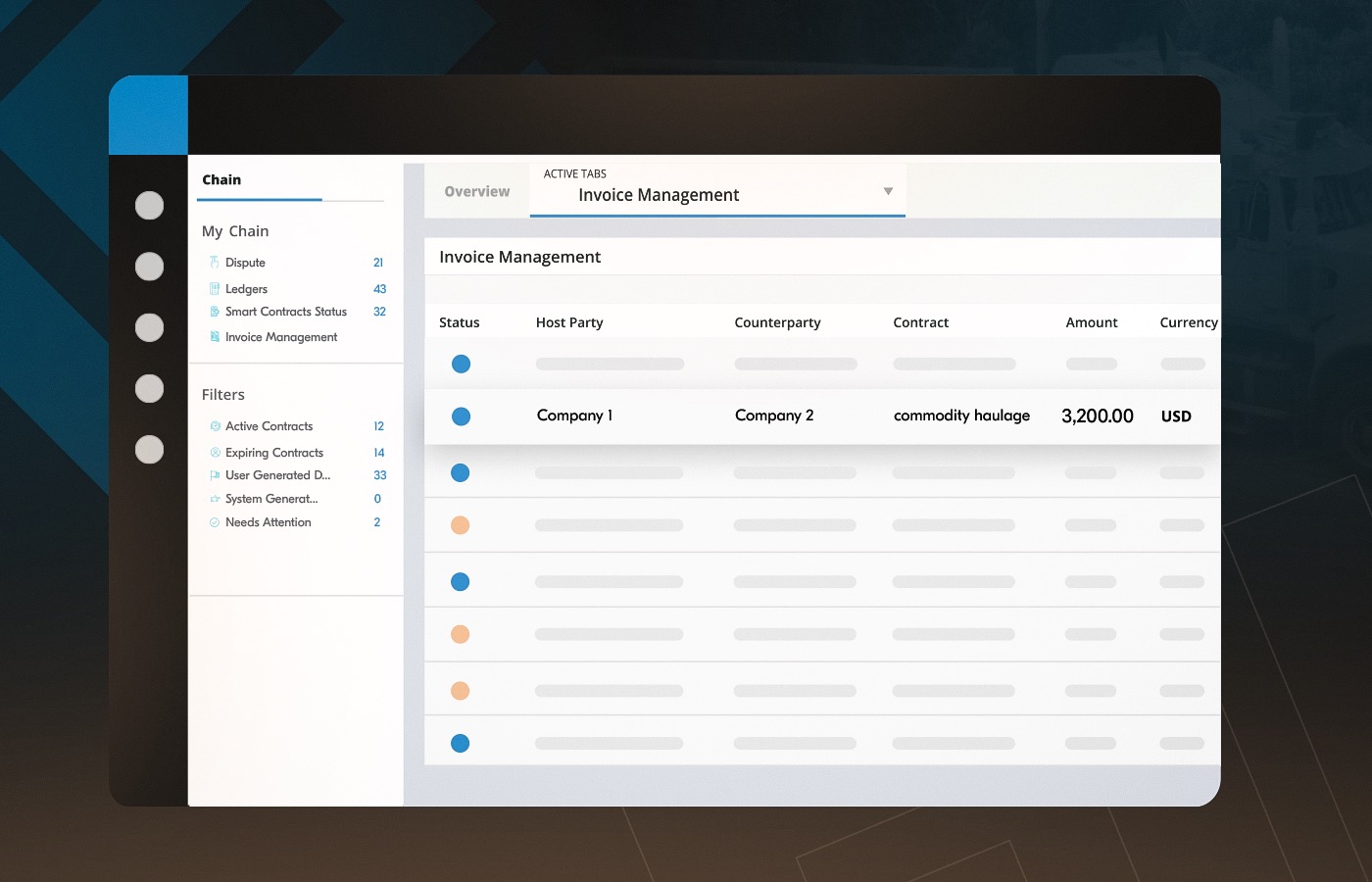
A French oil and gas company needed end-to-end traceability across a supply chain that spanned multiple parties, each running their own systems, with no unified view of product movement from extraction to distribution. Fragmented data, manual processes and a persistent fraud and counterfeiting problem made the case for a shared, tamper-resistant record that all stakeholders could trust.
We built a decentralized system on Ethereum, with automated agreements automating the business rules and agreements between suppliers, manufacturers, logistics providers and distributors. IoT sensors and RFID tags were integrated to capture real-time data on product movement and condition throughout the chain, feeding validated data directly into the blockchain.
The project ran for 18 months with a team of six specialists. By the end of the project, the client could track products from extraction to delivery, reduce manual errors and administrative costs, detect potential fraud and counterfeiting, and use an auditable transaction history to meet regulatory requirements more easily.
Final Thoughts
Supply chains are becoming more complex, and the tools that worked well ten years ago often cannot keep up. Blockchain can help companies deal with disconnected data, unclear pricing, slow dispute resolution, and fraud risks that increase as more parties become involved.
As emerging technologies, including artificial intelligence and IoT, continue to converge with distributed ledger infrastructure, the supply chain industry could see even more powerful applications emerge, transforming supply chain processes, enhancing transparency and enabling the kind of transparent operations that were simply not achievable with traditional supply chains.
If your organisation is looking to integrate blockchain into its logistics or transportation infrastructure, Acropolium builds custom solutions tailored to your industry, whether that’s energy, transportation, hospitality or e-commerce. Contact us for more details.




![Transport App Development [A 2025 Guide for Startups & Businesses]](/img/articles/transportation-app-development-guide/img01.jpg)