
- SaaS
- Enterprise Development
- Backend
- Cloud Solutions
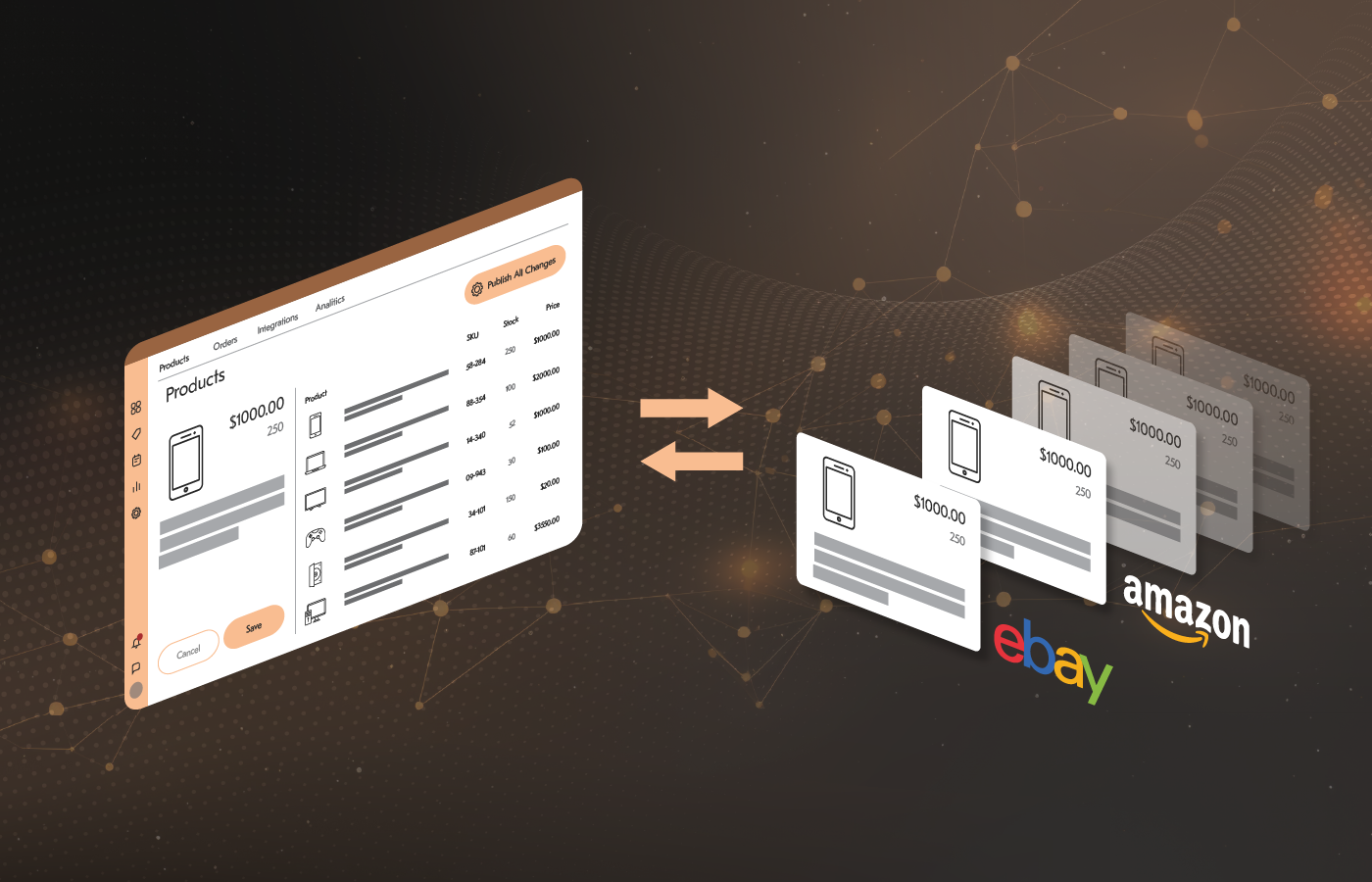
Management of product listings across marketplaces requires synchronization. Businesses without scalable architecture and integrations cannot satisfy the customer needs. Acropolium developed a multi-platform listing management software for the client. Our solution helps to control listings and cross-channel operations across Amazon and eBay.
client
NDA
 Israel
The client is an eCommerce technology provider offering a platform for merchants to manage product listings across major marketplaces, including Amazon and eBay. The solution supports listing creation and content standardization. They also wanted to have the inventory synchronization and revenue optimization through cross-sell capabilities.
The platform operates under a multi-tenant subscription model, enabling multiple merchants to manage their catalogs within a shared infrastructure. This requires strong isolation of data, scalable architecture, and consistent performance across tenants with varying catalog sizes and operational complexity.
As the number of merchants and listings increased, the client needed to modernize the platform to ensure stability, support evolving marketplace APIs, and enable further growth without performance degradation.

request background
Building a scalable listing management platform for Amazon and eBay
The client approached Acropolium with the need to modernize and extend their existing listing management platform. Our team’s goal was to support efficient product listing operations across Amazon and eBay. Meanwhile, all the operations would have the accurate inventory synchronization and a consistent user experience.
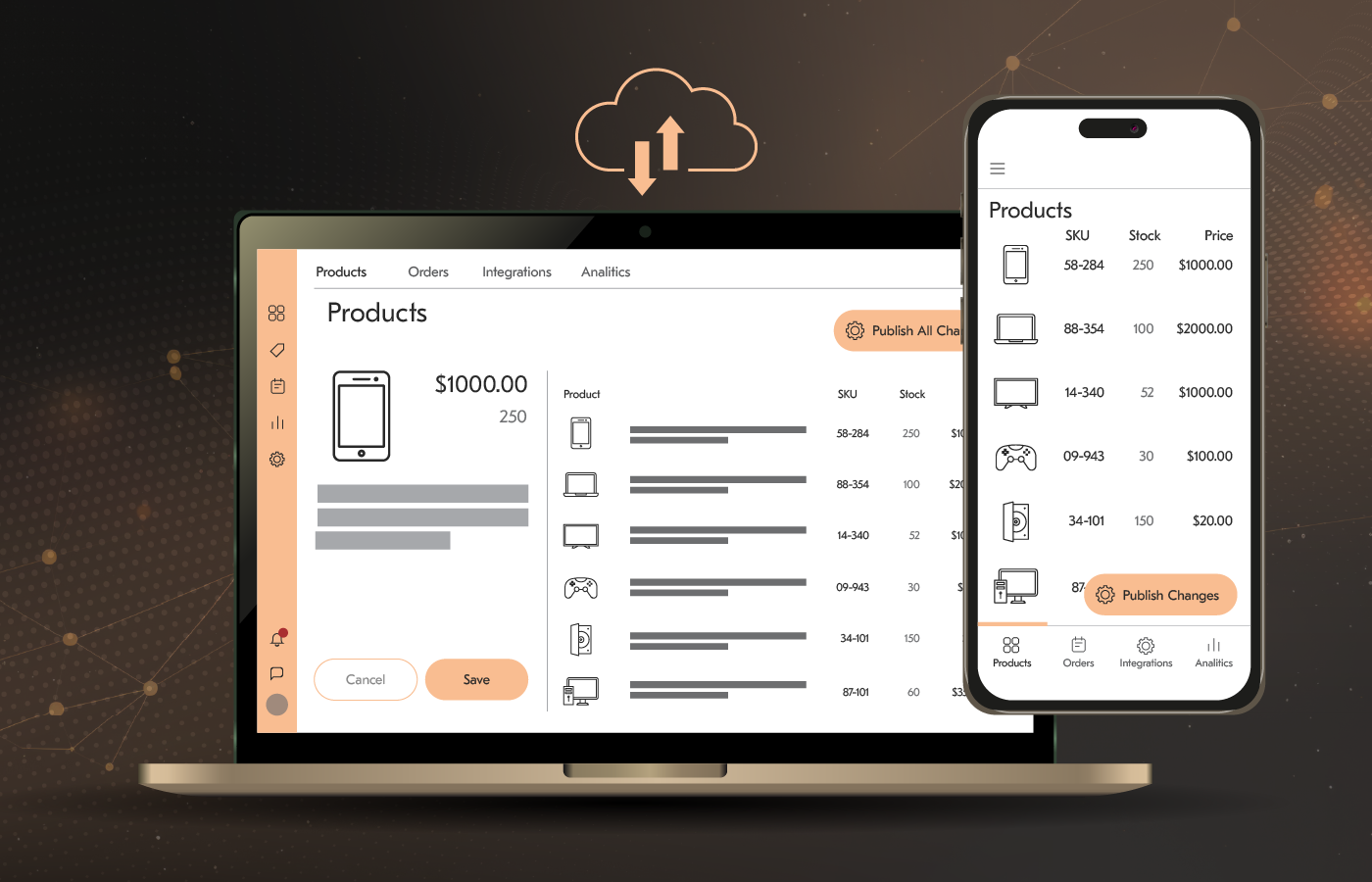
A key requirement was to provide advanced Amazon listing management software capabilities, including product description templates, listing publishing workflows, and centralized control over catalog data. At the same time, the system needed to support eBay listing management software features with seamless synchronization between marketplaces.
The client also required advanced Amazon listing management capabilities. Some of these features were bulk updates, structured content templates, and automation of listing workflows. At the same time, the platform needed to ensure reliable eBay Amazon integration software functionality, supporting real-time synchronization and minimizing inconsistencies. This positioned the system as both a listing management platform and an inventory management software for eBay and Amazon, capable of handling high-volume operations.
Another important objective was to enable eBay and Amazon integration with bi-directional inventory synchronization. The platform had to function so that product availability, pricing, and updates were consistently reflected across channels. In case, the client avoid it, they couldn’t prevent discrepancies and operational issues.
The system also needed to support a multi-tenant architecture, allowing multiple merchants to operate independently within the same platform. This required a scalable listing management platform capable of handling growing data volumes, user activity, and integration complexity.

challenge
Modernizing legacy listing management and marketplace integrations
The primary challenge was modernizing a legacy system built on an outdated PHP codebase. The existing architecture limited scalability, introduced performance bottlenecks, and made it difficult to maintain and extend the platform as business requirements evolved.
Another challenge involved maintaining and updating marketplace integrations. Changes in Amazon and eBay APIs required continuous updates across all clients using the platform. This created operational overhead and increased the risk of integration failures, particularly in a system with tightly coupled components.
Performance degradation was a critical issue. As the number of merchants and product listings increased, the system struggled to maintain stable response times. Inefficient data processing and outdated libraries guaranteed reduced performance and increased latency.
The client’s infrastructure also presented limitations in the current landscape. AWS Lambda functions were heavily used. When business logic was fragmented and dependent on specific implementations. That’s why it created knowledge silos for the development team. This made the system harder to manage and scale.
Finally, the platform needed to evolve into a robust inventory management software for eBay and Amazon with reliable synchronization and high availability. Achieving this required rethinking both the architecture and integration approach to support real-time operations across multiple marketplaces.
goals
- Modernize the legacy system for stability
- Enable efficient multi-platform listing management across Amazon and eBay
- Ensure bi-directional inventory marketplace synchronization
- Support seamless eBay Amazon integration with updated APIs
- Improve system performance inside growing workloads
- Enable multiple merchants with scalability
- Simplify infrastructure and eliminate dependency bottlenecks
- Prepare the platform for future enhancements with AI
solution
Rebuilding a scalable listing management and marketplace integration platform
 Node.js, React.js, AWS ECS, Docker, Load Balancer, Microservices architecture, Amazon API, eBay API
 10 months
 5 specialists
Acropolium approached the project as a full modernization of a listing management platform rather than incremental updates. The system was redesigned to support scalable multi-channel operations for reliable Amazon listing management and eBay listing management.
The redesigned system operates as a scalable multi-platform listing management solution. Our success story is a prove that everything is possible. We supported the client with complex merchant operations. It enables centralized control over listings and inventory. We work on maintaining synchronization across marketplaces. By improving eBay and Amazon integration reliability and strengthening eBay listing management software capabilities, the platform ensures consistent product data and operational efficiency across all channels.
The backend was fully rewritten from PHP to Node.js to improve performance, maintainability, and scalability. On the frontend, React.js was introduced to create a more responsive and consistent user experience. The technology had to cover the management of product listings, templates, and publishing workflows.
From an infrastructure perspective, the system was migrated to a microservices architecture deployed on AWS ECS. This allowed the team to decouple components, reduce system complexity, and support independent scaling of services. A load balancer was implemented to guarantee smooth traffic distribution and enable the gradual migration of endpoints.
A critical part of the solution involved restructuring marketplace integrations. The team rebuilt integrations with Amazon and eBay APIs for compatibility. The platform enabled reliable eBay Amazon inventory management software capabilities, including synchronized updates across platforms.
To eliminate bottlenecks, business logic previously handled by AWS Lambda was moved into the core application. Acropolium’s work reduced dependency on isolated components and improved system transparency.
- Rewrote PHP to Node.js for backend
- Upgraded frontend interface to React.js
- Refactored architecture into microservices
- Migrated cloud infrastructure to AWS ECS storage
- Rebuilt Docker images
- Implemented load balancing for gradual migration
- Replaced Lambda-based logic with centralized data services
- Stabilized Amazon and eBay API integrations in the platform
- Optimized inventory synchronization
outcome
Stable multi-channel listing management system
- Stabilized platform performance under increasing workloads
- Comprehensively updated Amazon and eBay API integrations
- Modernized infrastructure for scalable deployment
- Improved inventory synchronization accuracy within marketplaces
- Established future product and analytics features core