Key Takeaways
- AI in education enhances learning outcomes, improves accessibility, and streamlines administrative tasks, making the process more efficient and engaging.
- Applications of AI in education cover personalized learning, intelligent tutoring systems, automated grading, and predictive analytics.
- Leading companies like Coursera and Carnegie Learning already implemented AI to offer innovative learning experiences.
- Successfully integrating AI in educational platforms requires moving beyond basic software deployment; it demands robust governance frameworks, strict data privacy protocols, and targeted instructional alignment.
- AI in education professional development is critical. Training initiatives from leaders like ISTE, ASCD, and EdTechTeacher equip teachers with fundamental AI literacy, prompt engineering skills, and the confidence to use AI as an instructional “co-pilot.”
- The most effective AI implementations in education automate tedious administrative tasks (such as grading and scheduling) while delivering hyper-personalized, data-driven learning experiences for students.
- Navigating AI education implementation challenges, such as algorithmic bias, ethical dilemmas, and data security-requires cross-functional collaboration and the adoption of secure, scalable software architectures.
Education drives progress, but the sector faces major challenges, including teacher shortages, growing administrative workloads, and declining student performance. To ease these pressures and address diverse learning needs, schools are turning to artificial intelligence.
AI is reshaping education by automating routine tasks, personalizing lessons, and boosting engagement. It helps teachers work more efficiently and expands access to learning. This article explores the benefits of AI in education, highlights common use cases, and shares real-world examples of how technology is transforming teaching and learning. However, realizing this potential requires more than just purchasing software. Integrating AI in educational platforms demands a strategic approach that empowers educators, protects student data, and redefines the learning environment. This article explores the core benefits of AI, practical use cases, and how institutions can overcome complex implementation hurdles through dedicated professional development.
What is AI in Education?
First, let’s start with the key question: what is artificial intelligence in education?
The role of artificial intelligence in education is primarily to enhance learning experiences for both educators and students through data-driven solutions.
Its adoption surged during the pandemic as schools shifted to remote learning, but challenges like slow digitization and limited IT infrastructure in emerging regions hinder growth. Despite this, AI drives better outcomes with tailored lessons, chatbots, and data-driven insights, while reducing administrative workloads and boosting classroom engagement.
According to the expanding impact of AI on education, the market is expected to grow from $5.18 billion in 2024 to $112.30 billion by 2034, with a CAGR of 34.52%.

How is AI used in education through emerging technologies?
- Machine learning personalizes learning by analyzing student data to tailor lessons and resources.
- Natural Language Processing (NLP) powers chatbots and virtual assistants for student support, enabling communication and answering questions.
- Data analytics provides insights into student performance, helping educators make data-driven decisions for improved teaching strategies.
Benefits of Using AI in Education
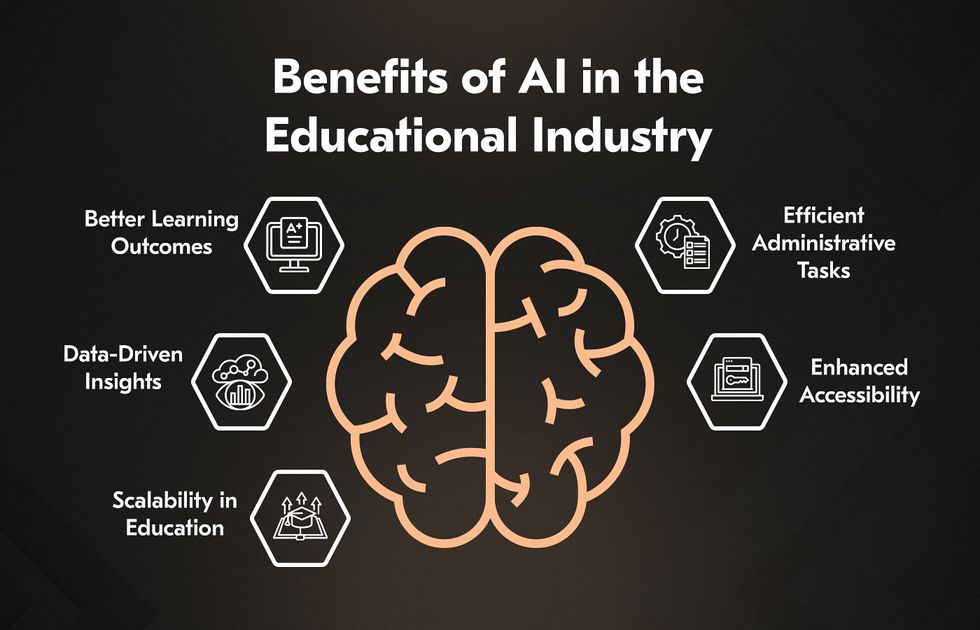
The benefits of AI in education revolutionize the way it is delivered, empowering both teachers and students. Here are the most valuable ones:
Better Learning Outcomes
AI enhances learning outcomes for each student by analyzing their strengths, weaknesses, and preferences. This adaptability ensures learners receive content at the right difficulty level and in the most effective format.
Efficient Administrative Tasks
Streamline time-consuming administrative tasks like grading, attendance tracking, and scheduling. Automated SaaS grading systems quickly evaluate assignments, quizzes, and exams, freeing up teachers’ time to focus on more interactive or high-impact activities.
Data-Driven Insights
Another role of AI in education lies beyond analyzing vast amounts of student data (in some cases, including that from legacy databases) to identify patterns and trends. These insights boost decision-making, help predict student performance, and identify early signs of disengagement or academic struggles.
Enhanced Accessibility
Enhance accessibility for students with disabilities by providing support tools that make learning more inclusive. Text-to-speech, speech-to-text, and real-time translation help students with visual impairments, hearing challenges, or language barriers.
Scalability in Education
Scaling is no longer problematic with multi-tenant SaaS solutions powered by virtual classrooms, adaptive learning platforms, and AI-driven tutoring systems. This is especially important for online learning environments and in areas with a shortage of teachers.
Key Applications of Artificial Intelligence in Education
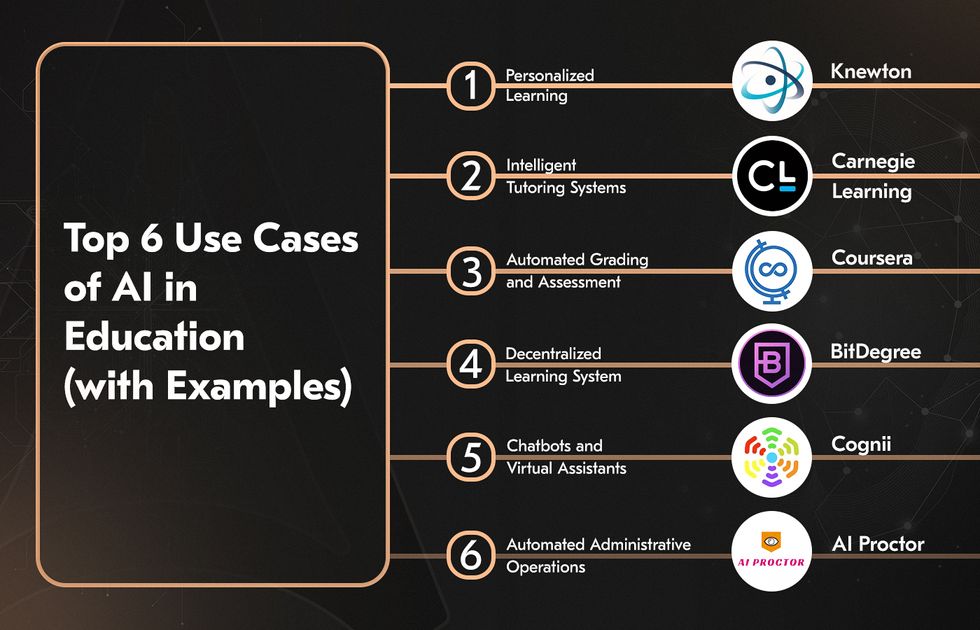
Today, when the use of AI in hospitality or transportation no longer surprises anyone, the technology also opens up new possibilities for students, faculty, and staff. When evaluating how can AI be implemented in education, it is vital to look at proven, high-impact applications. Here are six transformative use cases currently reshaping the sector.
Personalized Learning Ecosystems
AI allows educators to transition from a “one-size-fits-all” curriculum to hyper-customized learning paths. Adaptive platforms analyze a student’s strengths and cognitive gaps in real time, serving content at the precise difficulty level required to ensure mastery. For example, platforms like Knewton have successfully utilized machine learning to deliver billions of personalized recommendations, allowing students to progress at their own optimal pace.
Intelligent Tutoring Systems
These systems mimic the nuanced guidance of a human tutor. By providing step-by-step interventions and real-time feedback, intelligent tutors are exceptionally effective in complex STEM subjects. Carnegie Learning’s MATHia is a prime example of successful AI implementation in education, adapting seamlessly to a student’s individual problem-solving strategies and adjusting skill levels dynamically.
Automated Grading and Assessment
Evaluating assignments and essays is notoriously time-consuming. Advanced NLP algorithms can now grade written submissions with near-human accuracy, often hundreds of times faster. Coursera, for instance, utilizes AI to expedite peer-review grading based on strict instructor rubrics, drastically reducing administrative bottlenecks and improving course completion rates.
Smart Chatbots and Virtual Assistants
AI-driven virtual assistants handle routine queries around the clock. Whether assisting prospective students with complex enrollment procedures, clarifying syllabus doubts, or sending automated deadline reminders, chatbots ensure seamless communication. Cognii’s Virtual Learning Assistant showcases this capability by offering real-time, conversational coaching that continually improves through machine learning.
Automated Administrative Operations
The successful implementation of AI in education extends far beyond the classroom. Institutions utilize AI to automate back-office workflows, including class scheduling, fee management, and regulatory compliance reporting. Furthermore, tools like AI Proctor ensure exam integrity for remote learners through sophisticated computer vision and speech recognition, identifying unauthorized browser activity even in low-bandwidth environments.
AI in Education Professional Development (PD)
Perhaps the most crucial, yet overlooked, use case is training the educators themselves. AI integration in education fails if teachers view the technology as a threat rather than a tool. AI-driven platforms are now being used to create personalized professional development pathways for faculty. By partnering with organizations like ISTE, ASCD, schools are providing hands-on training in prompt engineering, AI literacy, and ethical usage, transforming teachers into confident AI “co-pilots” who can drastically reduce their own workload.
Challenges and Considerations in Implementing AI Technology in Education
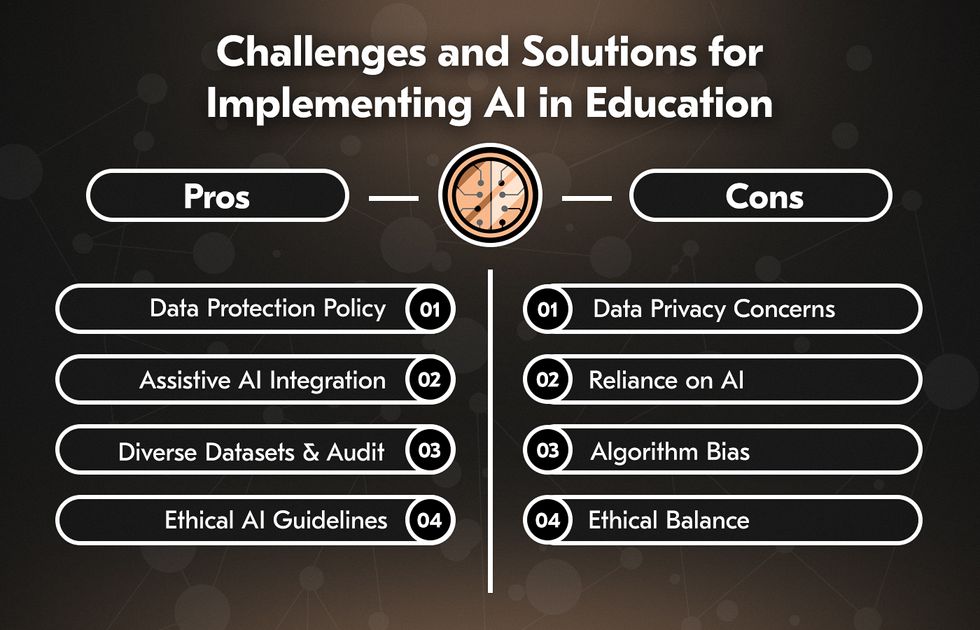
Like any impactful technology, AI applications in education examples come with their own set of limitations, challenges, and potential for misuse. Let’s explore them in detail.
Data Privacy
Challenge: With rising AI for education use cases, vast amounts of personal and academic data are being collected. This raises concerns about data security and privacy, especially compliance with regulations like GDPR and FERPA.
Solution: Institutions should enforce strong data protection policies (encryption, access control, and anonymization) in web app architecture, as well as clear consent protocols and regular audits to ensure security.
Reliance on AI
Challenge: Excessive reliance on AI in education use cases can reduce human involvement, limiting educators’ roles and impacting student-teacher relationships.
Solution: AI should assist, not replace, teachers, providing support while educators make final decisions. Proper teacher training will ensure effective AI integration while maintaining their vital role.
Algorithm Bias
Challenge: AI algorithms, especially those designed for grading or admission decisions, may be biased, perpetuating inequalities and affecting certain student groups.
Solution: Regular auditing and testing of AI algorithms are crucial to identifying and mitigating potential biases. To ensure fairness, diverse datasets that reflect a wide range of experiences, backgrounds, and learning needs are also essential. Leverage our AI/ML consulting services to ensure your AI solutions are bias-free.
Ethical Balance
Challenge: AI may pressure students into specific career paths or limit their educational opportunities based on past performance or data-driven predictions.
Solution: Institutions should adopt ethical AI guidelines prioritizing fairness, transparency, and student autonomy. Design the solution to support educational goals rather than controlling or manipulating student choices.
Why Choose Acropolium?
Acropolium is a trusted and recognized vendor with extensive experience delivering secure educational projects. With expertise in GDPR-compliant bespoke software, ISO-certified processes, and serverless solutions, we ensure that every project meets the highest standards of data security and performance.
As a global AI consulting leader, Acropolium drives innovation while protecting sensitive data according to the latest education, hospitality, logistics, healthcare, and fintech trends.
Our proficiency spans across a wide range of services that highlight the importance of AI in education:
- Natural Language Processing (NLP) for advanced text analysis and sentiment detection;
- Predictive analytics for forecasting learning success;
- Conversational AI/Chatbots for personalized student interactions;
- Computer Vision, Voice, and Speech Recognition for easy authorization and control through exam;
- Generative AI for learning content creation and other advantages of using AI in education.
Acropolium Case Studies
We don’t want to be verbose, so let’s talk about our expertise using these case studies:
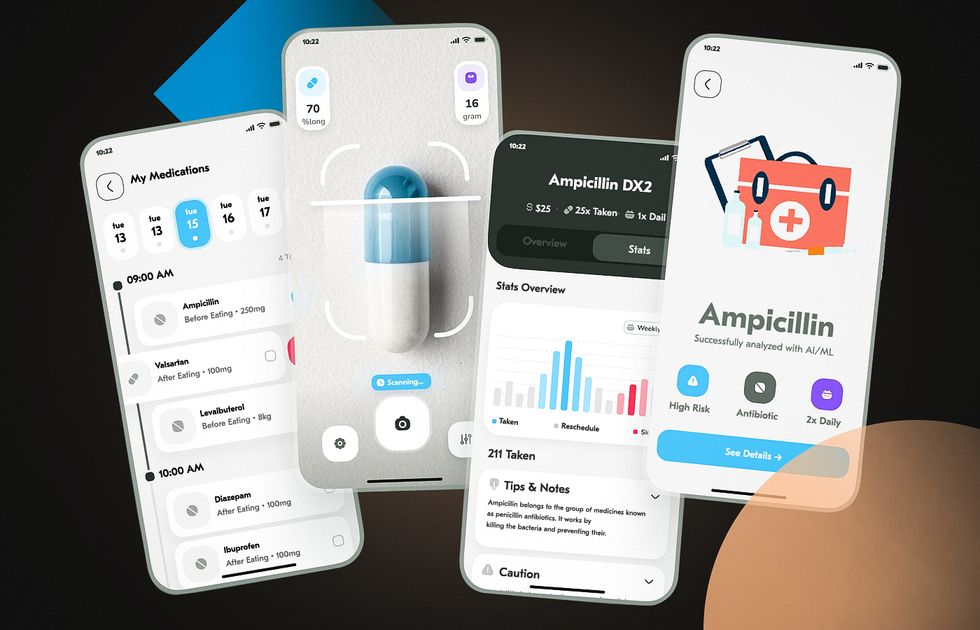
AI-Based Pharma Application Development
A leading healthcare provider partnered with Acropolium to revolutionize its operations through an AI-powered pharmacy app. Popular AI use cases included automated prescription processing and enhanced patient engagement tools. Also, the app ensured compliance with healthcare regulations.
The solution improved operational efficiency by 30%, increased patient retention by 15%, and enhanced data security, cutting breach risks by 25%.
Cross-Platform E-Learning Portal Development
Acropolium developed an e-learning platform with course-building, document automation, and video streaming to enhance student and tutor experiences. How is AI impacting education? The platform increased user engagement by 85%, reduced administrative overhead by 65%, and expanded the client’s reach, resulting in a 40% increase in user registrations.
Final Thoughts
Artificial intelligence is transforming the way we teach and learn. With advantages of AI in education like personalized learning, intelligent tutoring systems, and automated grading, it’s revolutionizing both student engagement and educational outcomes. As a result, AI-driven platforms enhance accessibility, streamline administrative tasks, and create interactive, scalable learning environments.
At Acropolium, we make successful AI solutions for education accessible through a convenient subscription-based service. Our offering covers all the essential needs of secure software development at a fixed monthly fee. Wonder how is AI affecting education? Reach out to our outsourcing dedicated team today, and let’s start building something extraordinary together!